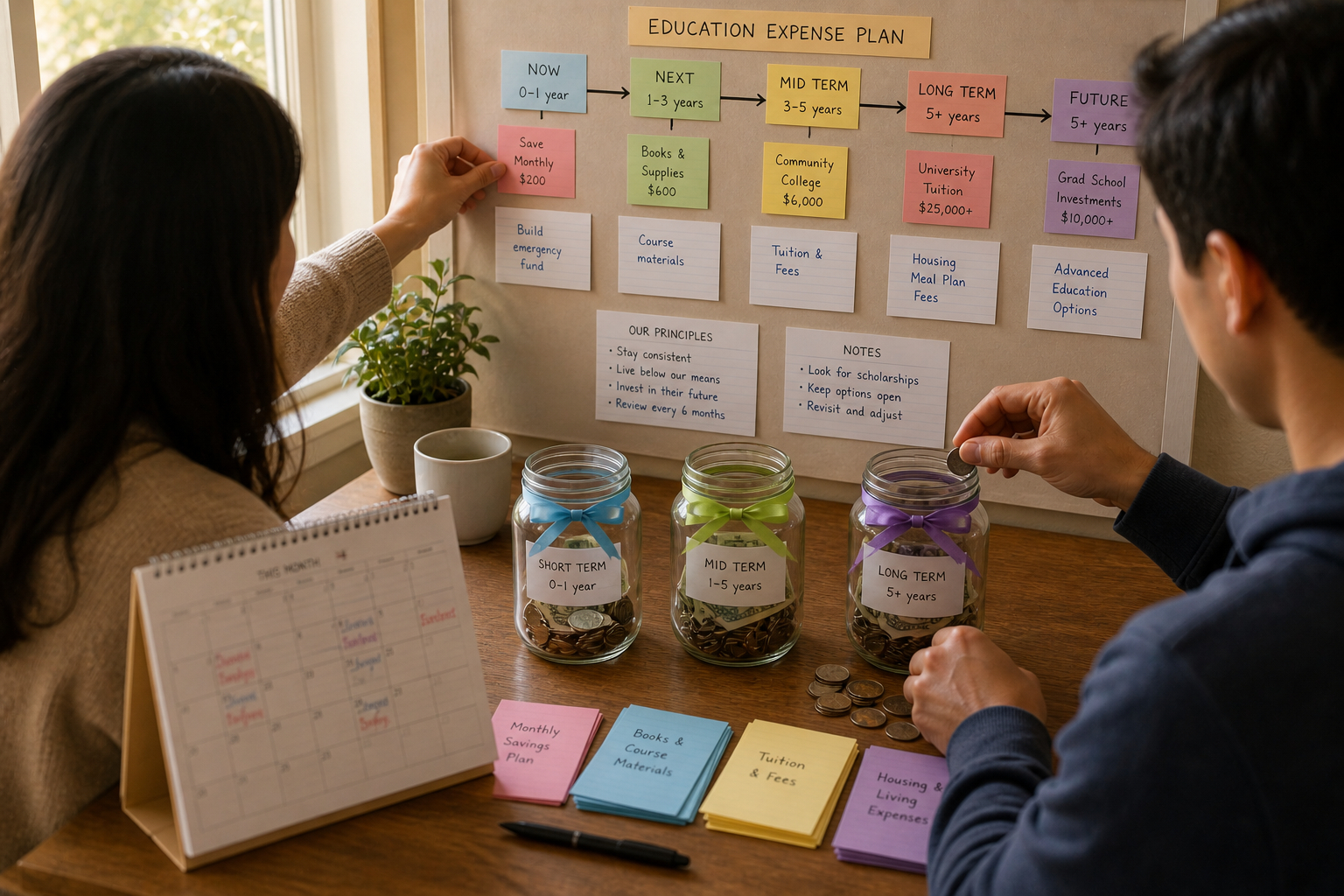
Stretching education dollars starts with a deliberate plan that matches resources to realistic goals. Whether saving for early programs, certifications, or continuing education, clarity about timing and expected costs makes decisions easier. Small, consistent actions compound and reduce pressure when milestones arrive. This article outlines practical steps families and individuals can use to plan and adapt funding for learning over time.
Clarify Goals and True Costs
Begin by mapping education objectives against time horizons and cost drivers. List each learning goal, identify when funds are needed, and estimate direct and ancillary costs such as materials, travel, or exam fees. Prioritize goals by impact and flexibility — some courses can shift to lower-cost alternatives or be delayed without harm. A clear inventory reduces surprises and helps you target savings and income allocation efficiently.
Having a prioritized schedule also clarifies which expenses require committed reserves versus those handled with short-term adjustments. This distinction guides whether to use liquid savings, earmarked accounts, or monthly budgeting.
Practical Budgeting and Funding Tactics
Use a mix of tactics to fund prioritized goals without straining monthly cash flow. Automate modest transfers to specific accounts, leverage employer or institutional benefits where available, and consider low-cost financing for unavoidable near-term needs. For predictable recurring learning, set up a rolling monthly contribution sized to cover average annual costs divided by twelve. Combining small regular savings with occasional targeted contributions smooths spikes and maintains momentum.
- Automated savings transfers
- Tiered reserve accounts for short- and long-term needs
- Flexible payment plans or community scholarships
These tactics work best when tied to the priorities identified earlier, so each fund has a clear purpose. Regularly reviewing contributions keeps allocations aligned with changing goals and income.
Track Progress and Build Flexibility
Track spending and outcomes to measure progress and make data-driven adjustments. Maintain a simple ledger or digital tracker that records contributions, withdrawals, and remaining targets; this visibility prevents drift and identifies opportunities to reallocate funds. Build flexibility through an emergency buffer and by keeping some funds in easily accessible instruments to cover unexpected course opportunities. Periodic reviews — quarterly or at key milestones — help you respond to changes in price, personal circumstances, or opportunities for cost savings.
Tracking creates discipline and reduces the last-minute scramble that inflates costs. Flexibility combined with discipline preserves choices while protecting household cash flow.
Conclusion
Smart planning turns education expenses into manageable commitments rather than emergencies. By clarifying goals, applying practical funding methods, and reviewing progress regularly, households can stretch education dollars over time. Consistency and flexibility are the most reliable levers for long-term success.