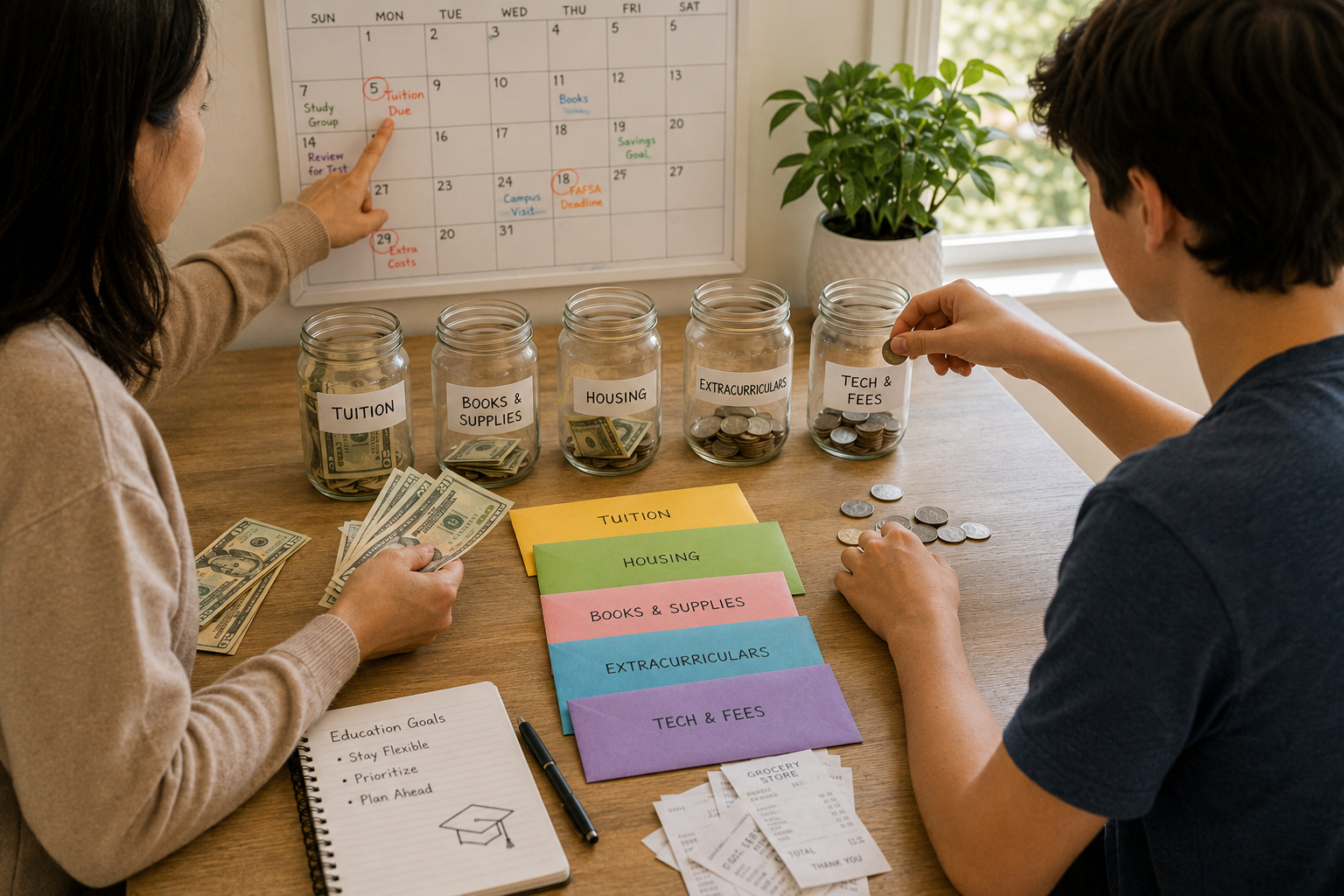
Managing the steady flow of education-related expenses does not require constant crisis mode or complex financial instruments. With a clear structure and a few predictable habits, families and learners can smooth costs across weeks and years. This article outlines practical steps that emphasize flexibility, realistic milestones, and simple tracking. The goal is to make education spending manageable without sacrificing learning options.
Assess Needs and Timeline
Start by listing the expected costs and linking each to a target date so you can prioritize what matters most. Include recurring items such as tuition installments, supplies, tutoring sessions, and irregular costs like exam fees or travel. Estimate conservative amounts and note which expenses can be delayed, reduced, or replaced with lower-cost alternatives. This assessment clarifies where to focus limited resources and where to build small cushions.
Revisit this inventory periodically to capture changes in course selection or family circumstances. Regular reviews prevent surprises and help shift funds before shortfalls appear. Keeping the list current makes planning actionable.
Create a Flexible Funding Mix
Relying on a single source of funding increases risk, so assemble a mix that matches timing and certainty. Combine steady monthly allocations with short-term sinking funds for predictable but infrequent costs. Preserve a modest contingency reserve for unplanned needs, and consider staggered savings tactics so money is available when specific bills arrive.
- Dedicated monthly contribution to an education envelope
- Sinking fund for annual fees and supplies
- Contingency buffer of one to two months of expected education spending
Balancing these elements creates both discipline and agility in the household budget. The mix can be adjusted as priorities evolve or income shifts.
Tools, Tracking, and Adjustments
Simple tools help maintain control without adding stress: a shared spreadsheet, a dedicated savings account, or an app that tracks labeled spending buckets. Record actual expenses against estimates so patterns emerge and corrections can be made early. Communicate regularly with household members or the student to align expectations and spot opportunities to cut or reallocate costs.
- Monthly reconciliation of education spending
- Quarterly review to reallocate funds if priorities change
- Use alerts or calendar reminders for upcoming payments
These habits turn planning into a living process rather than a once-a-year chore. Small, consistent adjustments keep plans realistic and resilient.
Conclusion
Consistent, modest systems are more effective than big, infrequent efforts. Structure funding around predictable needs while preserving flexibility for change. With routine tracking and simple funding buckets, education spending becomes manageable and less stressful.