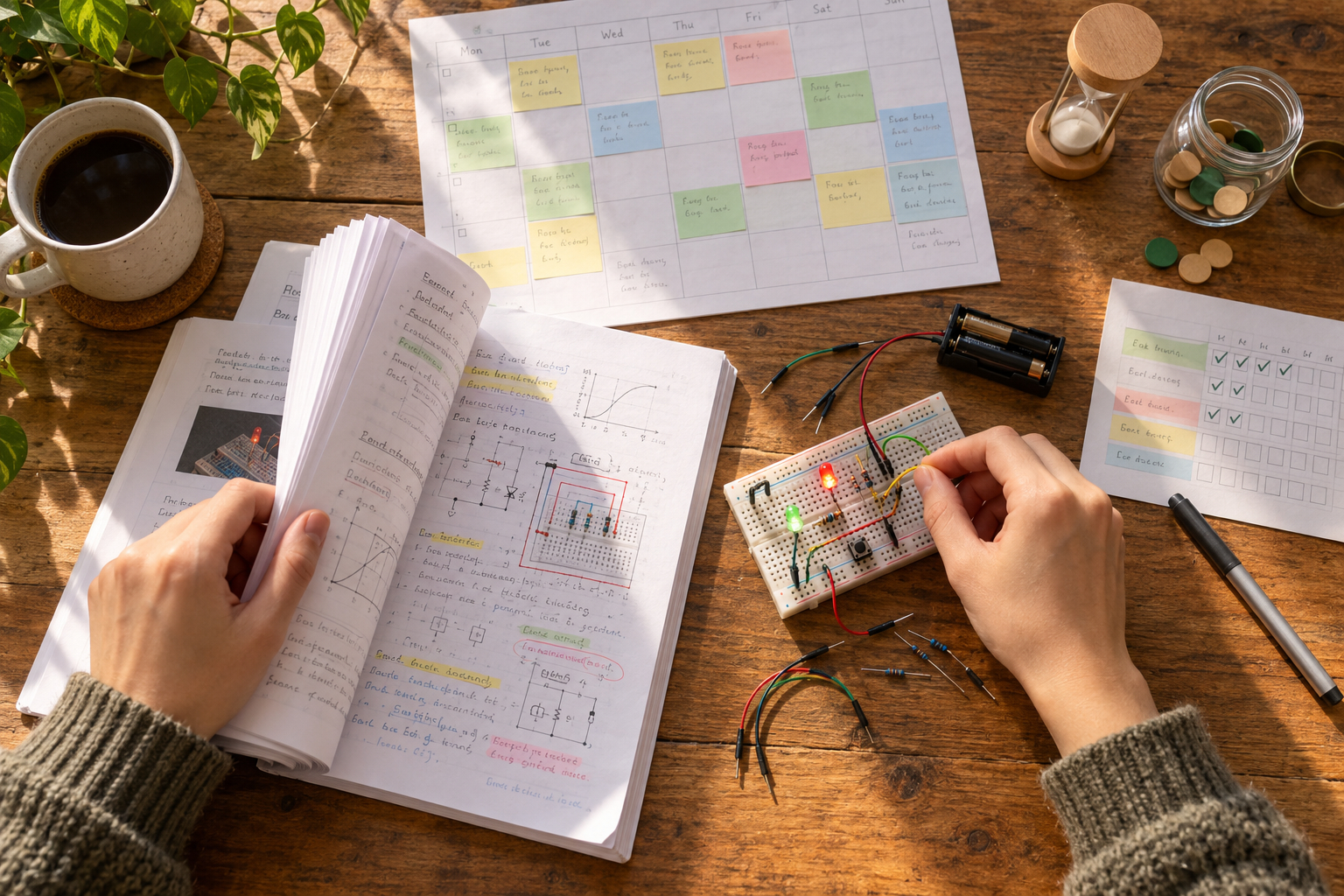
Short online courses and scattered study rarely add up to lasting ability. Scheduling a weekly learning calendar shifts your focus from “finish” to “apply.” This approach breaks big goals into predictable habits without overwhelming your week. Below are steps to build a calendar that actually helps you use what you learn.
Why a weekly learning calendar works
Setting a fixed weekly rhythm turns learning into part of your routine rather than a sporadic effort. It creates repetition that supports memory and lets you deliberately alternate between new material and practice. A predictable plan reduces decision fatigue: you spend energy on the work, not on choosing when to do it. It also makes progress visible, which keeps motivation steady.
You don’t need long daily sessions to be effective; consistency matters more than duration. Even 30-60 minutes several times a week compounds into real skill growth.
Building your weekly calendar
Start by listing your learning objectives for the month, then slot small, achievable sessions into specific days. Divide sessions into focused studying, hands-on practice, and quick reviews — for example, two study blocks, one practice block, and one review block each week. Treat the practice block like a deadline: plan a short project or exercise that applies the week’s new concepts. Keep sessions short and concrete so they fit into real life and avoid burnout.
- Monday — 45 minutes: watch a lesson and take notes.
- Wednesday — 30 minutes: guided practice or exercise.
- Friday — 30 minutes: apply concept to a small project.
- Sunday — 20 minutes: review flashcards or notes.
Adjust the blocks to match your energy and week; some people prefer shorter daily sessions while others like longer weekend blocks. The key is predictable placement so you can build momentum.
Stay accountable and tweak as you go
Make the calendar visible — add it to your main planner or a shared calendar with a study partner. Track one simple metric each week, such as completed practice sessions or minutes spent applying skills, and review it every Sunday. When a pattern shows missed sessions, identify a specific barrier and alter the plan: shift times, swap activities, or reduce session length. Small, frequent adjustments keep the calendar realistic and aligned with life changes.
Celebrate small wins by noting progress on the calendar or saving a snapshot of a finished project. These signals reinforce the habit and make the calendar feel rewarding rather than punitive.
Conclusion
A weekly learning calendar translates intention into repeated action, and repeated action builds capability. Start small, schedule specifically, and measure one clear outcome each week. Over months, those short sessions create practical skills you can rely on.
Related Articles



Recent Posts

How to Use Focused Review to Retain Online Course Skills
Designing Bite-Sized Learning Routines That Actually Stick
The Next Competitive Advantage in Online Education
10 Best Free (or Cheap) Online Classes for Seniors and Retirees
With students scarce, college admissions offices get friendlier, less intimidating


