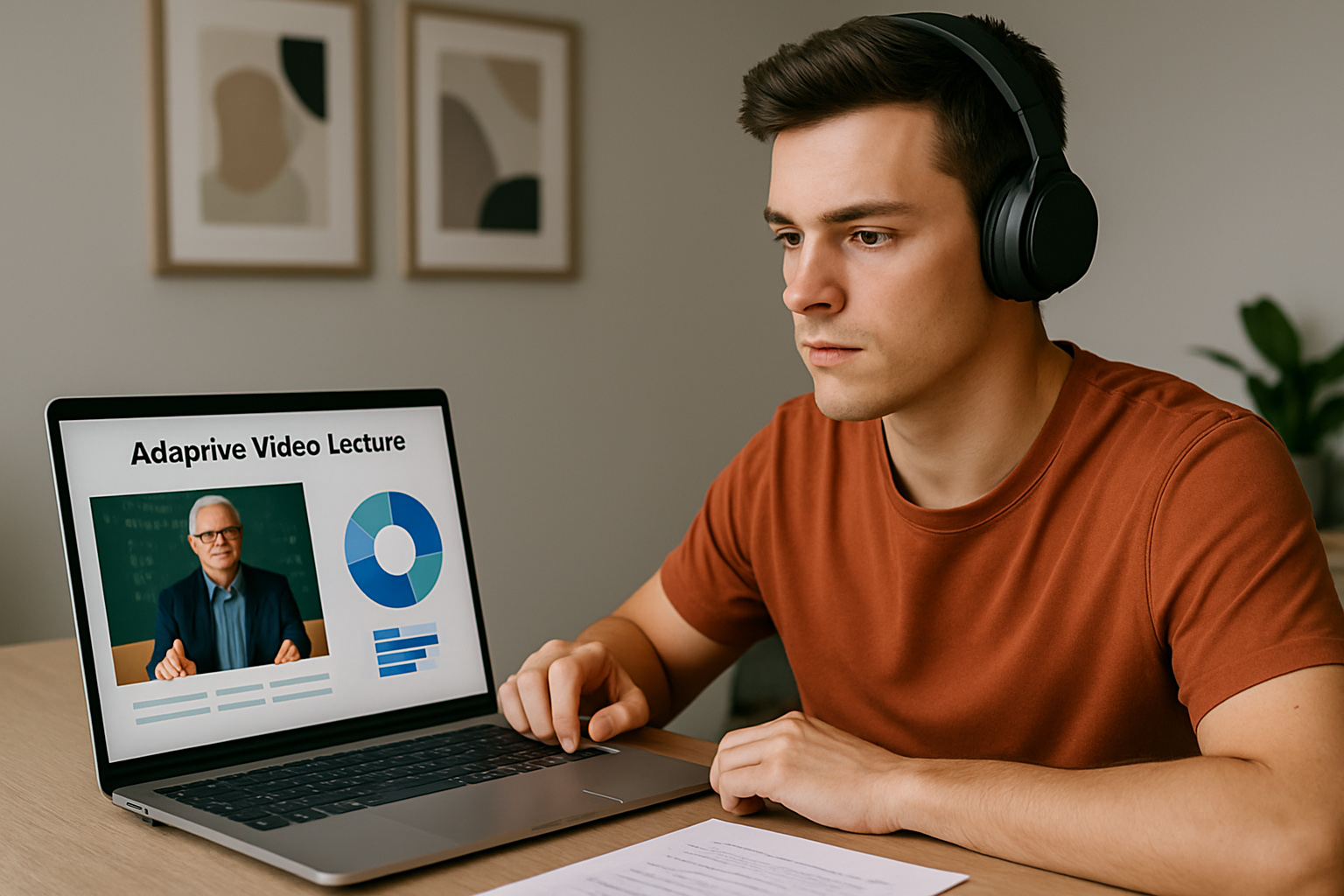
As digital learning evolves, adaptive video lectures are becoming one of the most powerful breakthroughs in education. These advanced systems use eye-tracking technology to understand how students engage with lessons in real time, allowing the content to shift, slow down, or reinforce ideas based on where learners look. This creates a highly personalized experience that helps students stay focused, understand concepts better, and learn at a pace that matches their attention.
Real-Time Attention Tracking for Better Learning
Eye-movement sensors can detect when a student is looking directly at key information or drifting away due to confusion or distraction. When attention drops, the system can automatically pause, highlight important points, or provide simplified explanations. Instead of passively watching a video, students receive a dynamic experience that responds to their engagement levels.
Personalized Difficulty Adjustments
Adaptive video lectures determine what concepts a learner struggles with by observing hesitation, repeated glances, or long fixations on complex visuals. The system then adjusts the difficulty level or adds examples that reinforce understanding. This turns every lesson into a one-on-one tutoring session—personalized without needing a human instructor present.
Reducing Cognitive Overload
Traditional lectures often move too quickly for some students and too slowly for others. Eye-tracking technology helps strike the right balance. If the system detects overload—such as rapid blinking or a shift in gaze—videos can automatically introduce short breaks, micro-summaries, or visual cues to support comprehension. This reduces fatigue and improves information retention.
Supporting Accessibility and Focus
Adaptive video tools also help learners with attention challenges. The ability to automatically refocus key elements or simplify content makes learning more accessible. Whether a student gets distracted or struggles with complex diagrams, the system adapts by keeping the most important information in clear view and at the right moment.
Conclusion
Adaptive video lectures represent the next wave of intelligent digital learning. By using eye-movement data to personalize pacing, complexity, and focus, they transform education into a responsive, learner-centered experience. As this technology spreads, classrooms and online platforms will deliver content that feels more intuitive, more supportive, and more aligned with how people truly absorb information.