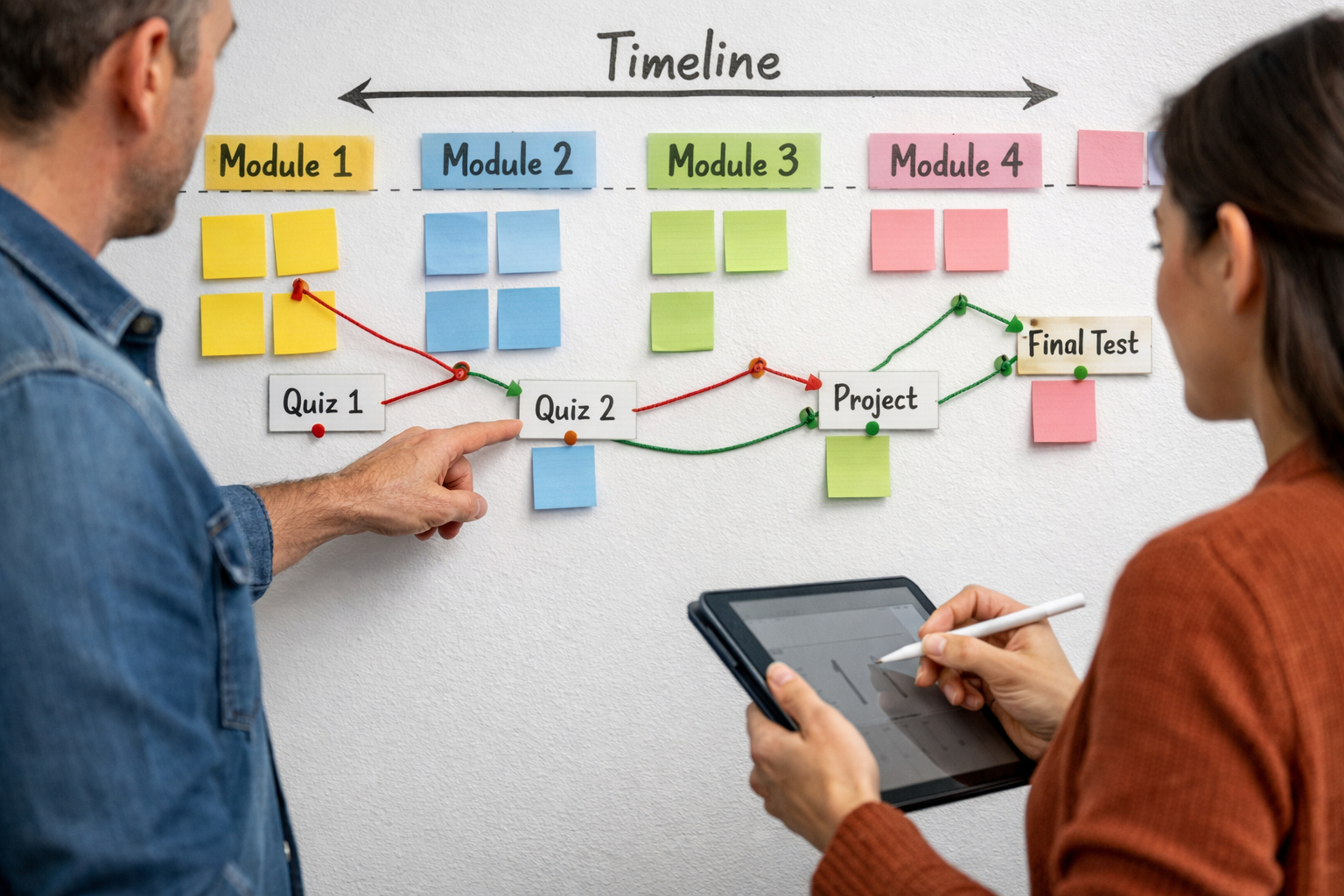
Designing online courses with deliberate architecture improves learner progress and retention.
A clear structure helps learners know where they are going and why each module matters.
Thoughtful alignment of objectives, activities and assessments reduces cognitive load and increases motivation.
This article outlines practical design choices that make progression measurable and meaningful.
These choices support both instructors and learners across different learning contexts.
Define Clear Outcomes
Start by translating broad course goals into specific, observable outcomes that learners can achieve.
Well-defined outcomes guide content selection and make assessment straightforward, so every activity serves a purpose.
When outcomes are measurable, progress becomes trackable and feedback can be targeted.
Clarity also helps learners set expectations and self-monitor their growth.
- Write 3–5 outcomes per module that start with active verbs.
- Map outcomes to assessment types and rubrics.
- Share outcomes at the start of each lesson.
Explicit outcomes reduce ambiguity and increase learner agency.
They also provide a foundation for consistent course evaluation and iterative improvement.
Sequence and Scaffolding
Sequence content so skills build logically from simple to complex, using scaffolding to bridge gaps.
Break tasks into manageable steps and provide examples, templates, or guided practice before expecting independent performance.
Micro-goals and checkpoints create a rhythm of achievement that sustains momentum.
Thoughtful pacing prevents overwhelm and supports diverse learning speeds.
Strategic sequencing encourages confidence and allows instructors to identify stumbling blocks early.
It also supports adaptive pathways for learners who need remediation or acceleration.
Assessment and Feedback
Align assessments directly with outcomes and design them to demonstrate real application rather than rote recall.
Use a mix of formative checks and summative tasks so learners receive ongoing information about their performance.
Timely, specific feedback tied to rubric criteria helps learners make concrete improvements.
Peer review and self-assessment can deepen reflection and ownership of progress.
Assessments double as learning activities when they require reflection and revision.
Data from these tasks can inform course tweaks and learner interventions.
Engagement and Accessibility
Engagement strategies should be embedded in the course architecture, not tacked on as optional extras.
Use varied modalities, active tasks, and social interaction to maintain interest while ensuring materials are accessible.
Universal design choices—clear navigation, readable text, and alternative media—benefit all learners and remove barriers.
Small milestones and recognition of progress reinforce sustained participation.
Prioritizing accessibility widens reach and improves outcomes across the learner population.
Inclusive design is also a practical way to reduce support requests and improve course completion.
Conclusion
Well-aligned course architecture turns intentions into measurable learner progress.
Small, consistent design choices compound into meaningful outcomes.
Review and iterate regularly to maintain clarity and effectiveness.