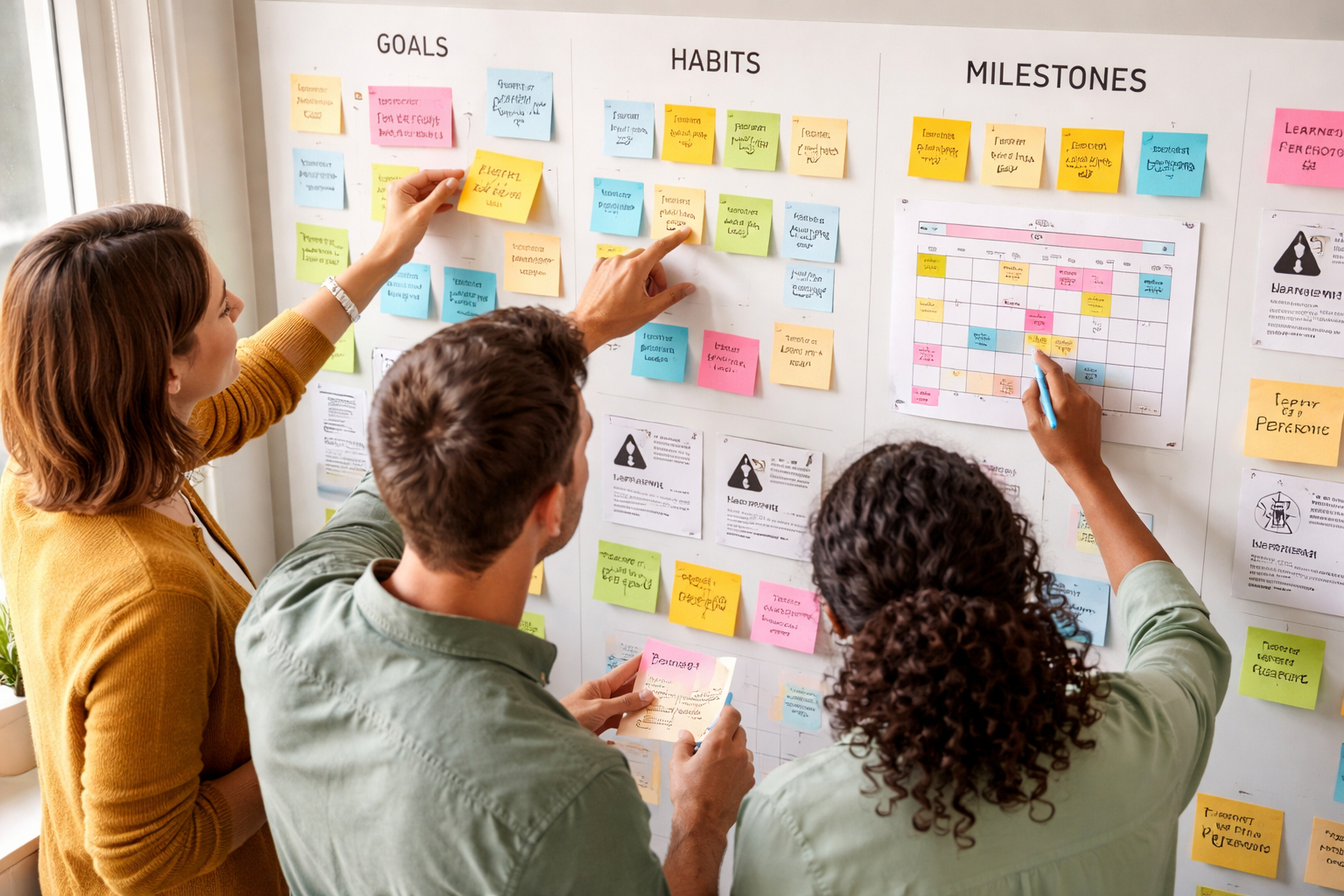
Building online courses that reflect real learner goals improves completion and long-term skill use.
When design respects learners’ time and habits it becomes easier to sustain engagement.
This piece outlines practical steps to match curriculum structure to learner motivations, routines, and outcomes.
Use these approaches to create clearer progression and more meaningful impact in your programs.
Identify and Prioritize Learner Goals
Start by gathering direct input from learners and stakeholder teams to surface the outcomes learners care about.
Translate those outcomes into measurable objectives that guide module sequencing and assessment design.
Prioritization helps reduce cognitive load by focusing on transferable skills rather than exhaustive coverage.
Documenting goals clearly creates alignment across facilitators, designers, and learners, and it sets expectations early in the course.
- Skill-based objectives (what learners can do)
- Motivational objectives (why they care)
- Contextual objectives (where they will apply skills)
With prioritized goals you can craft activities that map directly to outcomes, and reduce unnecessary content.
This clarity improves relevance and supports stronger completion and retention rates.
Design Around Learner Habits and Time Constraints
Analyze typical learner schedules and preferred study rhythms to design realistic engagement patterns.
Break content into short, focused modules that fit into daily or weekly routines rather than long, uninterrupted sessions.
Incorporate flexible pacing options, clear time estimates, and optional deep-dive resources for learners who want more.
Designing with habit in mind increases the likelihood learners will return and build momentum through consistent progress.
- Microlearning bursts for busy days
- Scheduled reminders and recommended rhythms
- Optional synchronous check-ins for accountability
These choices reduce friction and respect learner realities, which improves adoption.
A habit-aware design encourages steady forward motion without overloading participants.
Measure Progress with Meaningful Milestones
Replace vague completion metrics with evidence of skill application and confidence gains at staged milestones.
Use formative checks, project-based assessments, and reflective prompts to surface real learning rather than rote completion.
Connect assessments directly to prioritized goals so both learners and instructors see clear progress signals.
Transparent rubrics and exemplar work help learners self-assess and plan next steps effectively.
- Short projects aligned to workplace tasks
- Peer review cycles for practical feedback
- Skill badges tied to observable outcomes
Meaningful milestones motivate learners by showing tangible improvement and practical readiness.
They also provide instructors with actionable data to iterate on course elements.
Conclusion
Align course structure with learner goals, habits, and measurable milestones for more effective learning outcomes.
Small design choices that respect time and purpose compound into greater completion and transfer of skills.
Apply these strategies to create courses that fit learners’ lives and deliver sustained impact.