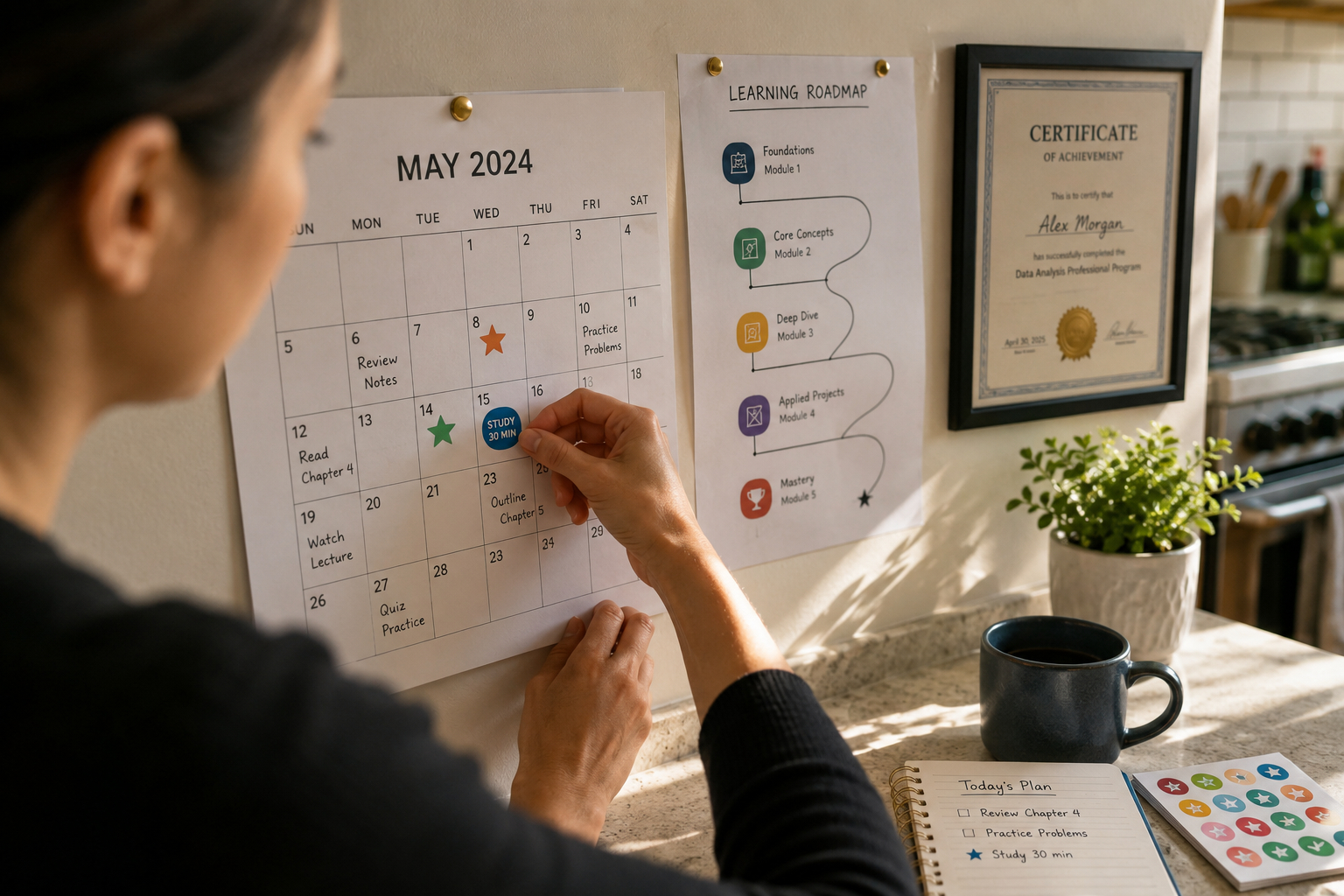
Adult learners juggling work and study need clear cues that tie short actions to bigger objectives. Daily study signals—visible, predictable prompts and small checkpoints—can reduce friction and sustain effort. When designers align those signals with course milestones and learner goals, completion rates and satisfaction improve. This article outlines practical patterns to design, measure, and refine those signals in self-paced online programs.
Why study signals matter
Study signals are the micro-interactions and interface cues learners see every day: reminders, progress bars, short tasks and feedback nudges. They help translate abstract goals into immediate next steps and reduce decision fatigue. Signals work by framing tasks as achievable, lowering activation energy and keeping momentum visible.
Without consistent signals, learners often delay study until motivation spikes, which is unreliable. Intentional signals create predictable study rhythms and make following through easier.
Design patterns for daily study signals
Start with a predictable cadence: schedule brief, time-boxed tasks that fit into typical daily windows and respect common routines. Pair those tasks with clear status indicators that show progress toward meaningful milestones and next steps. Use low-effort checkpoints and varied feedback—confirmation, corrective hints, and short reflections—to reinforce learning and competence.
Prioritize signals that require a tiny, one-step action to complete, so learners can register a win quickly. Over time, these micro-actions compound into sustained study habits.
Measuring impact and iterating
Collect simple metrics tied to the signals: activation rate, completion of daily tasks, and subsequent session length. Qualitative feedback reveals whether prompts feel helpful or intrusive and which cues actually drive behavior. Experiment with small A/B changes: timing, wording, and visual emphasis, and observe retention and completion shifts.
Use short iteration cycles and guardrails so changes don’t disrupt learner routines. Combine quantitative and qualitative insights to prioritize the most effective signals.
Practical examples and quick wins
Implement a morning prompt that asks learners to commit to a ten-minute practice and display an immediate progress chip when completed. Add a weekly milestone email summarizing cumulative minutes and one small next step tied to a meaningful module outcome. Embed micro-reflections—two sentence prompts after practice—to surface learning and boost metacognition. Provide optional streak rewards that emphasize consistency over perfection to avoid discouraging occasional gaps.
Start with one or two signals and watch how they change study patterns within a few weeks. Adjust cadence and tone based on real learner responses.
Conclusion
Clear daily study signals bridge the gap between intention and action by making progress visible and immediate. Designers who align those micro-cues with long-term goals reduce friction and support lasting habits. Measure, iterate, and keep interactions minimal to respect busy learners while amplifying results.