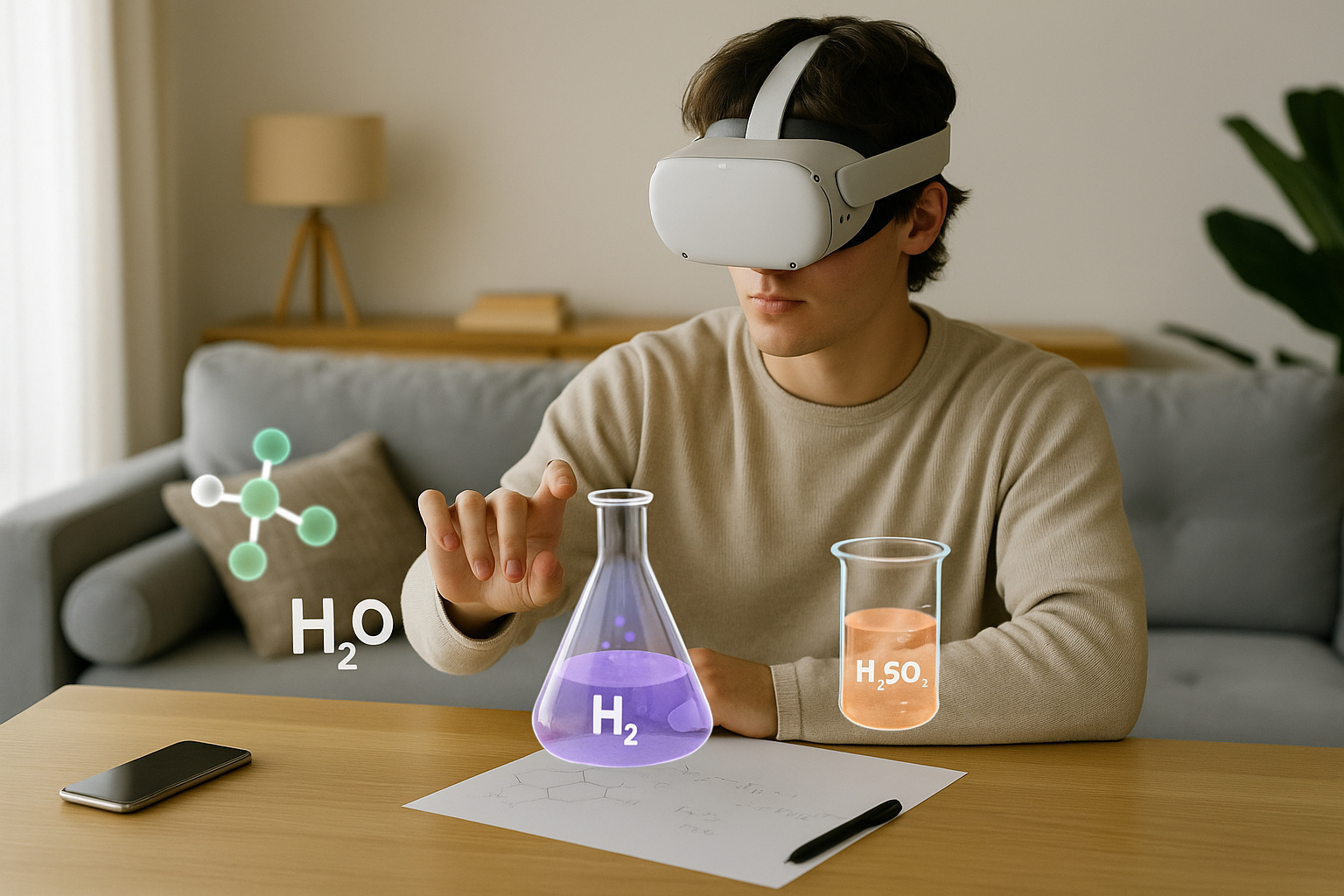
Augmented Reality (AR) is opening a new frontier in science education by bringing hands-on experimentation into virtual spaces. As more students engage in remote and hybrid learning, AR tools are helping recreate the interactive, immersive experiences typically found in physical laboratories. These digital environments allow learners to visualize scientific concepts, manipulate virtual equipment, and conduct simulated experiments—all from home. AR is transforming how science is taught, making complex topics more accessible and engaging for students everywhere.
Enhancing Learning Through Immersive Visualization
One of the biggest advantages of AR in remote science labs is its ability to make abstract concepts easier to understand. AR overlays digital elements onto real-world environments, allowing students to observe molecular structures, chemical reactions, or physics simulations right in their living space. This immersive visualization strengthens comprehension by helping learners see science in action rather than only reading about it.
Safe, Repeatable Virtual Experiments
Remote learners often face limitations when it comes to conducting real-world experiments due to safety requirements, specialized equipment, or cost. AR removes these barriers by offering virtual simulations where students can experiment freely without risk. Whether mixing chemicals, observing forces, or dissecting organisms, students can practice, repeat, and learn from mistakes without consequences. This flexibility enhances confidence and supports deeper understanding.
Increasing Engagement Through Interactive Tools
AR brings a level of interaction that significantly boosts student engagement. Instead of passively watching videos or reading instructions, learners can manipulate virtual objects, rotate models, and engage with 3D simulations. These hands-on interactions mimic the tactile experience of physical labs, keeping students active and motivated. This interactive approach is especially helpful for subjects that traditionally rely heavily on lab work.
Expanding Access to Quality Science Education
Not all schools or households have access to well-equipped science labs. AR helps bridge this gap by providing portable, scalable lab experiences that only require a compatible device. Students in rural areas, under-resourced schools, or at-home learning environments can explore the same high-quality scientific simulations as those in advanced facilities. This democratization of science learning helps ensure more equitable opportunities for all students.
Conclusion
Augmented Reality is revolutionizing remote science labs by making learning more immersive, interactive, and accessible. From virtual experiments to 3D visualizations, AR empowers students to explore scientific concepts in ways that were once limited to physical classrooms. As AR technology continues to advance, the future of science education will only become more innovative, engaging, and inclusive.