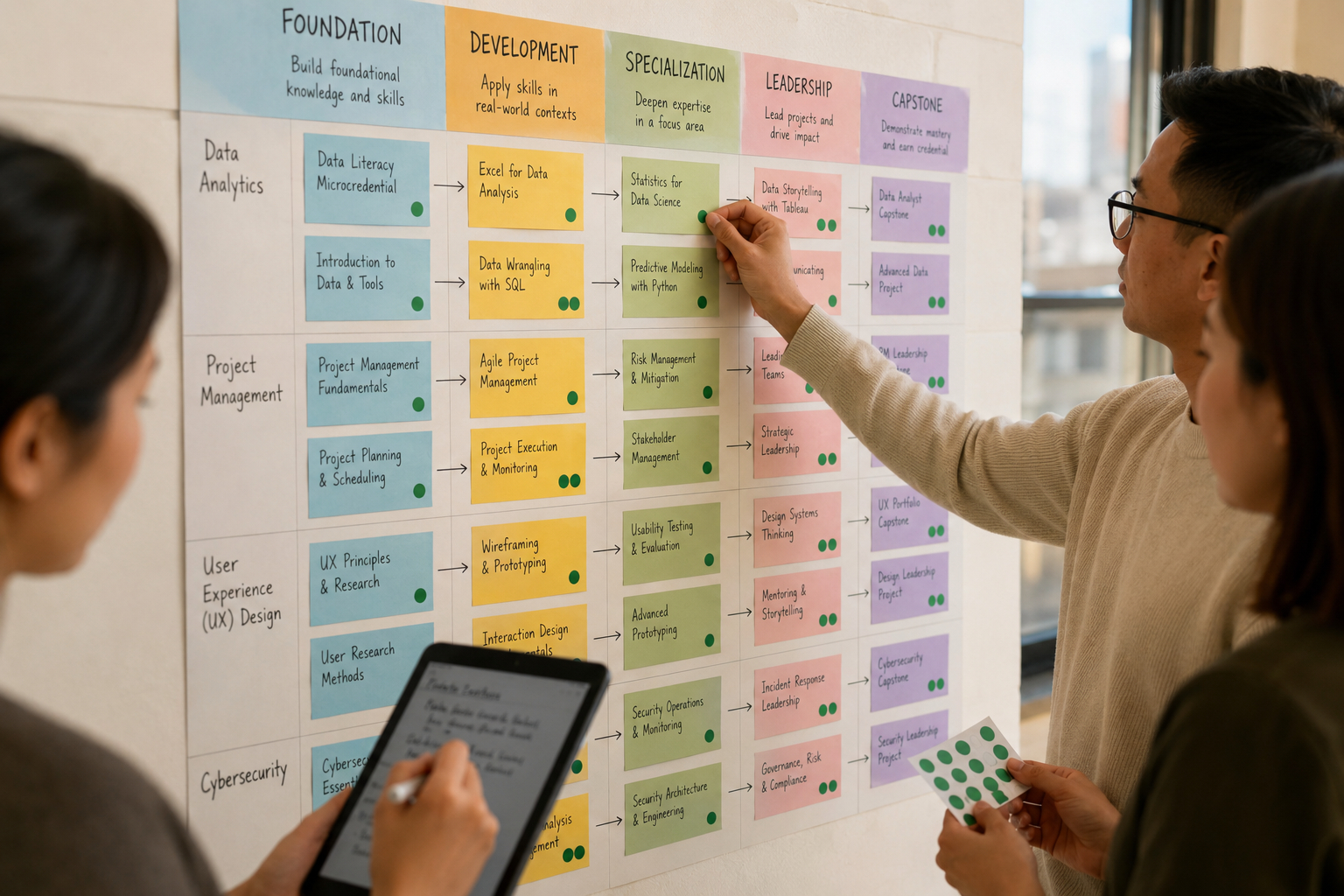
Adult online learners benefit when course progress is structured as layered pathways that reveal clear next steps. Layered progress paths break learning into visible stages, helping students maintain momentum and measure growth. This article outlines design principles and practical tactics to build these pathways in self-paced or cohort-based programs. The guidance focuses on clarity, feedback, and flexible checkpoints.
Principles of Layered Progress Design
Start by mapping the core competencies learners must master and group them into progressive layers from foundational to integrative tasks. Each layer should have three to six focused activities that target a specific skill set and can be completed within a predictable time window. Clear success criteria and lightweight evidence of mastery keep expectations explicit and reduce cognitive load. Structure pathways so learners can choose optional extensions without derailing core progression.
These principles establish a stable backbone for navigation and motivation. They help make progress feel achievable while preserving opportunities for deeper exploration.
Micro-signals and Checkpoints
Micro-signals are small, frequent indicators that a learner has moved forward: completed tasks, badges, brief reflections, or visual progress bars. Checkpoints should be low-stakes and frequent, providing rapid reinforcement and quick corrective feedback. When spaced appropriately, these checkpoints convert sporadic effort into sustained momentum by creating routine success experiences.
- Completion ticks and micro-badges for short modules.
- One question reflections to cement learning and guide next steps.
Keep the mechanics simple and consistent across modules so signals remain meaningful. Overloading checkpoints with heavy assessments undermines their motivational value.
Feedback Loops and Autonomy
Timely, focused feedback is essential to layered pathways because it clarifies how to progress and what corrective actions to take. Combine automated feedback for routine tasks with occasional instructor or peer comments on integrative work to balance scale and depth. Encourage learner autonomy by offering branching choices once core layers are complete; choice increases investment while respecting varied goals. Design feedback prompts that are actionable and invite revision rather than pass/fail judgments.
This mix sustains engagement while supporting personalized growth. It also signals that progress is both measured and meaningful.
Practical Implementation Tips
Start small by piloting a single pathway for a critical competency and refine the layer definitions based on learner behavior and feedback. Use analytics to spot drop-off points and simplify confusing transitions. Align communications so learners know what to expect each week and how to interpret progress indicators.
- Prototype one micro-path and gather learner feedback quickly.
- Standardize label and UI for progress indicators.
- Schedule brief onboarding to explain pathways and choices.
Iterate based on evidence and keep changes incremental. Over time, these adjustments will improve completion and satisfaction.
Conclusion
Layered progress paths give adult online learners a clear, manageable route through complex content. By combining principled design, frequent micro-signals, and purposeful feedback, courses become more navigable and motivating. Small, data-informed changes can yield measurable improvements in engagement and outcomes.