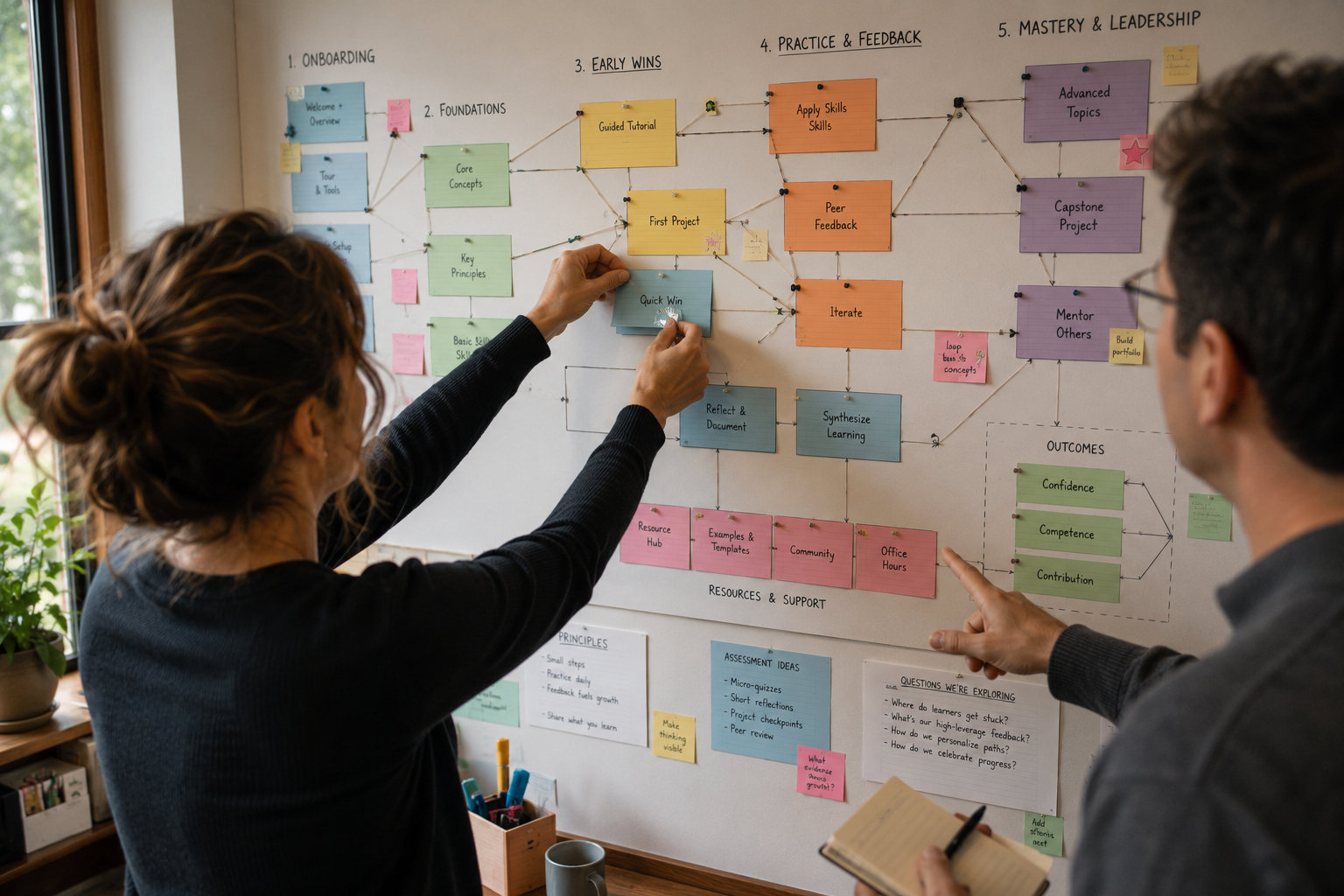
Online learners succeed when courses provide a clear map from where they start to where they need to be. A learning map translates outcomes into approachable milestones, shows dependencies between skills, and highlights logical study sequences. When learners can see progression, they make informed choices about pacing and prioritize effort on meaningful tasks. This clarity reduces friction and improves sustained engagement across a program.
Identify Core Learning Nodes
Begin by breaking the curriculum into core nodes: essential concepts, foundational skills, and integrative projects. Each node should represent a teachable unit that builds directly toward an outcome and can be demonstrated through simple evidence. Organizing content around these nodes helps instructors avoid unnecessary overlap and keeps pathways focused. Nodes also allow learners to identify quick entry points and plan stepwise progress.
Define success criteria for every node so students and facilitators share a consistent expectation. When assessment aligns with the node’s purpose, feedback is faster and more actionable.
Sequence for Early Wins and Deepening Mastery
Create a sequence that balances early achievable wins with opportunities for deeper practice. Start with high-confidence tasks that establish momentum, then introduce increasingly complex challenges that require synthesis. Sequencing should scaffold cognitive load: introduce one central idea at a time and give space for application before adding related concepts. This approach builds learner confidence and reduces dropout caused by early overwhelm.
Plan periodic integrative activities that require skill transfer across nodes. These checkpoints reinforce learning and reveal where additional supports are needed.
Design Visible Signals and Feedback
Make progress visible through simple signals: badges for completed nodes, checklist statuses, and short reflective prompts after assessments. Transparent signals help learners monitor their journey and maintain motivation during long courses. Pair signals with concise feedback that tells learners what to improve and where to go next, keeping guidance action-oriented and specific. Timely, low-stakes feedback supports iterative improvement without penalizing risk-taking.
Combine automated signals with occasional human touchpoints to sustain momentum and address sticky gaps. These mixed signals create a balanced, responsive learning environment.
Conclusion
Clear learning maps translate abstract goals into tangible steps that learners can follow. By structuring nodes, sequencing for wins and depth, and making progress visible, courses become easier to navigate and more motivating. These elements together support sustained engagement and meaningful skill development.