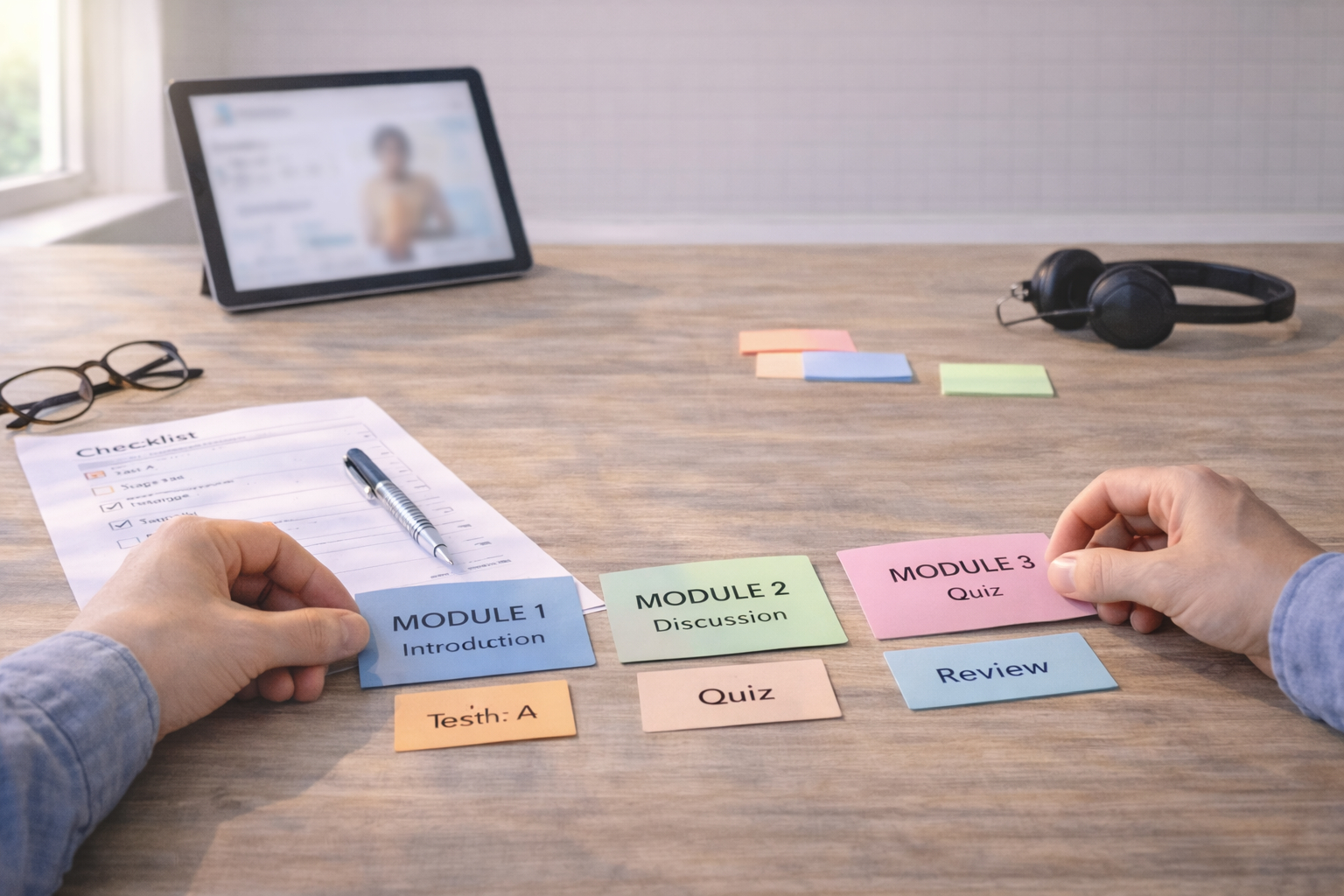
Designing online learning requires a clear focus on learner needs, outcomes, and practical application. Effective courses balance structure with flexibility so adult learners can connect new knowledge to real tasks. Thoughtful sequencing, varied activities, and regular feedback help maintain momentum and clarify progress. This article outlines core approaches to build cohesive, engaging online learning experiences.
Designing learner-centered modules
Start by defining specific learning outcomes that describe observable skills or behaviors. Break content into manageable modules that scaffold complexity and allow learners to practice in short cycles. Use a mix of explanations, examples, and applied tasks so learners can transfer concepts to their work or projects. Prioritize clarity in instructions and provide checkpoints to reduce cognitive overload.
By centering modules on outcomes and practice, learners stay motivated and understand why each element matters. Well-designed modules also make it easier to iterate and update content based on learner feedback and assessment results.
Sustaining engagement and assessment
Engagement depends on relevance, variety, and timely feedback. Incorporate active learning techniques such as case studies, scenario-based questions, and peer interactions to promote deeper processing. Frequent formative assessments, like short quizzes or reflective prompts, give learners immediate insight into their understanding. Balance summative assessments with low-stakes practice opportunities to encourage experimentation without high pressure.
Regular feedback loops—automated where appropriate and instructor-led when needed—help learners correct misconceptions and stay on track. Engagement design should also include social elements that build community and accountability.
Choosing technology and ensuring accessibility
Select tools that align with learning goals rather than adopting technology for its own sake. Lightweight platforms that support multimedia, discussion, and assessment are often sufficient and reduce barriers for learners with limited time or bandwidth. Ensure content meets accessibility standards so all learners can interact with materials using assistive technologies. Provide multiple formats for key resources, such as transcripts for videos and downloadable documents for offline study.
Testing content across devices and gathering learner input early helps reveal usability issues before they affect large groups. A pragmatic technology approach keeps the focus on learning while minimizing technical friction.
Conclusion
Creating cohesive online learning experiences combines clear outcomes, modular design, active engagement, and accessible technology. When courses emphasize practice, feedback, and relevance, adult learners achieve measurable progress and apply skills with confidence. Regular iteration based on learner data ensures the experience remains effective and aligned with evolving needs.