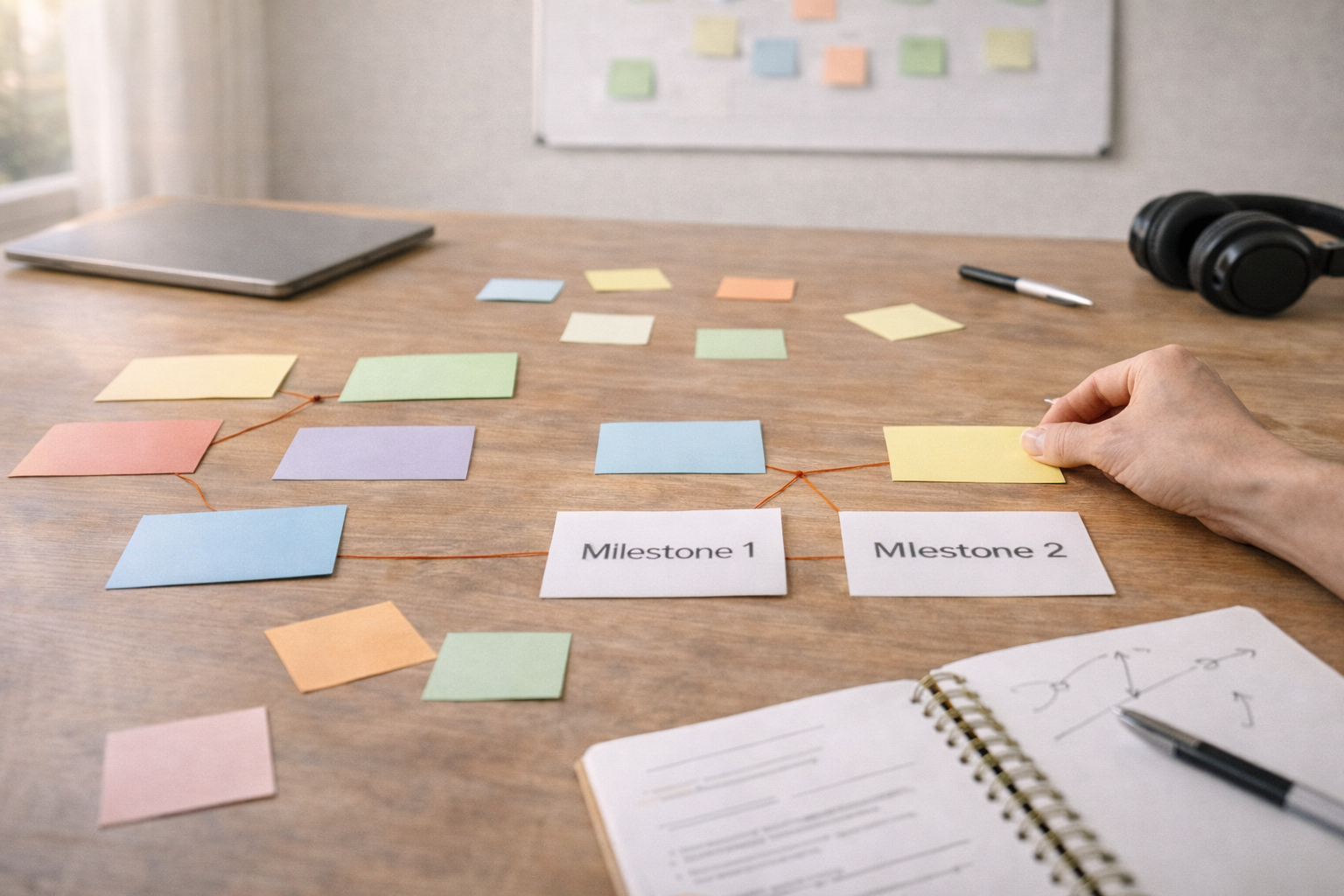
Designing online courses around learner pathways improves clarity and outcomes. When instructors map a sequence of skills and milestones, students understand progress and expectations. Clear pathways connect objectives, resources, activities, and assessments into a coherent journey. The result is a course that feels purposeful and easier to navigate.
These pathway elements make it easier for instructors to design learning sequences. The rest of this article explores practical steps to build and refine learner-centered pathways.
Define Learning Objectives and Learner Personas
Begin by articulating specific learning objectives and developing learner personas. Personas capture motivations, prior knowledge, and barriers so design decisions can be targeted. Align each objective with measurable outcomes and decide what mastery looks like. This base ensures pathway steps are meaningful and achievable.
Share these definitions with stakeholders and learners early to gather input. Iteration at this stage prevents misalignment later in the course build.
Structure Modular Milestones and Scaffolding
Break the curriculum into modules that each deliver a clear competency. Use scaffolding so tasks increase in complexity and learners practice prior skills in new contexts. Include formative checks that inform both learners and instructors about readiness to advance. Modular milestones help learners experience frequent achievement and reduce overwhelm.
Map prerequisites explicitly so learners know options for remediation or acceleration. Well-structured modules support flexible pacing and clearer assessment design.
Support Engagement, Feedback, and Assessment
Sustain momentum with varied interactions: discussions, applied projects, and peer review. Provide timely, actionable feedback tied directly to milestones so learners know next steps. Use assessments both as measurement and as learning activities that build transferable skills. Offer choices in activities to respect different learning preferences and increase intrinsic motivation.
- Short, frequent quizzes for retrieval practice.
- Mini projects that apply concepts in real contexts.
- Peer feedback rubrics for consistent evaluation.
Track progress with dashboards and regular check-ins. Encourage reflection so learners integrate new skills into broader goals.
Leverage Technology Thoughtfully
Choose platforms and tools that make navigation and progress visible while minimizing cognitive load. Integrations like gradebooks, discussion threads, and resource repositories should map to pathway milestones so learners see the purpose of each tool. Prioritize accessibility features, mobile compatibility, and reliable performance to reduce friction. Provide brief orientation materials so learners can use tools confidently.
Keep technical requirements simple and transparent. Offer troubleshooting support and alternative formats when issues arise.
Iterate with Data and Learner Input
Collect data on engagement, assessment outcomes, and drop-off points to identify where pathways stall. Combine quantitative analytics with qualitative feedback from learners to understand motivations and obstacles. Use A/B testing for new module designs and measure whether changes improve completion and mastery. Regular analysis enables targeted updates and more effective resource allocation.
Schedule periodic curriculum reviews informed by both learner outcomes and instructor experience. Small, consistent improvements maintain alignment with evolving learner needs.
Conclusion
Learner-centered pathways transform course design from a sequence of topics into a guided journey. By defining objectives, modularizing content, and offering purposeful feedback, educators create clearer, more motivating experiences. Regular review and learner feedback keep pathways responsive and effective.
Related Articles



Recent Posts

Designing Compact Choice Menus to Foster Student Decision-Making
Teaching Students to Sequence Tasks for Deeper Engagement
Practical Classroom Methods for Teaching Strategic Study Prioritization
Translate Everyday Work into Clear Professional Evidence
A Practical Process for Building Portable Career Proofs


