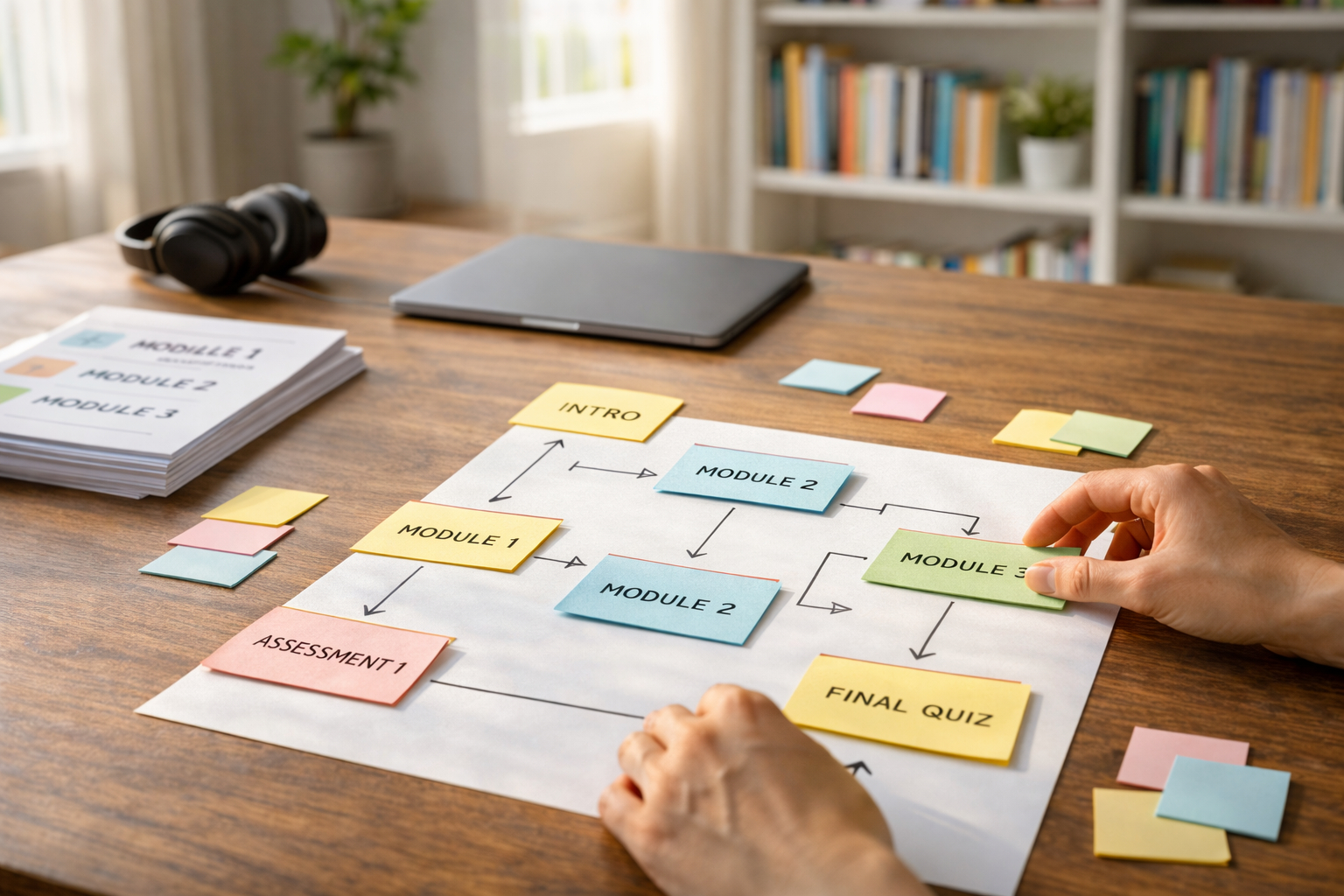
Online education succeeds when learners can navigate a clear, purposeful pathway from introduction to mastery. Course designers who prioritize structure and measurable goals help students stay motivated and make steady progress. Clear expectations reduce dropout and increase satisfaction across diverse learner groups. This article outlines practical design choices that create coherent learning journeys and improve outcomes.
Define Clear Learning Outcomes
Start by specifying what a learner will know or be able to do by the end of the course. Outcomes should be concrete, measurable, and written from the learner’s perspective. Use verbs aligned with Bloom’s taxonomy to avoid vague promises and guide assessment design. Well-crafted outcomes inform content choice, activities, and evaluation.
- Example: Analyze customer data to identify trends and generate insights.
- Example: Create a project plan that meets scope, time, and budget constraints.
- Example: Demonstrate proficiency in applying foundational concepts to real scenarios.
Communicate these outcomes at the course outset so learners understand the roadmap. Regularly revisit outcomes when reviewing or updating content.
Structure Content into Manageable Modules
Break the syllabus into short, focused modules that each address a specific outcome or skill. Each module should include a mix of explanation, demonstration, and practice to reinforce learning. Keep modules consistent in length and rhythm to build predictable study habits. Chunking content reduces cognitive load and supports incremental mastery.
- Module components: objective, core lesson, guided practice, quick assessment.
- Include estimated completion time and prerequisites for each module.
Label modules clearly and provide an estimated completion time. This transparency helps busy learners plan and maintain momentum.
Engage Learners with Active Activities
Passive lectures alone rarely produce durable learning; active techniques encourage deeper processing. Incorporate quizzes, problem-solving tasks, peer feedback, and short projects that let learners apply concepts. Use discussion prompts that require analysis rather than opinion to foster critical thinking. Balance individual and collaborative activities to accommodate different learning preferences.
Include timely feedback so learners can correct misunderstandings early. Rotate activity types to sustain interest across the course.
Measure Progress and Iterate
Define assessment strategies that align with outcomes and provide evidence of skill acquisition. Combine formative checks with summative assessments to support learning and certify achievement. Track engagement metrics and assessment performance to detect weak spots in content or design. Use learner feedback and data to refine pacing, examples, and resources.
- Monitor completion rates and time-on-task for module-level insights.
- Review assessment results to identify concepts that need clearer examples.
Establish a routine schedule for course reviews and updates. Small, data-driven changes accumulate into a stronger learning experience.
Conclusion
Designing clear learning paths brings coherence and measurability to online courses. By defining outcomes, organizing content into modules, engaging learners actively, and measuring progress, instructors can increase completion and learning. Regular iteration based on learner data ensures the course stays effective and relevant.