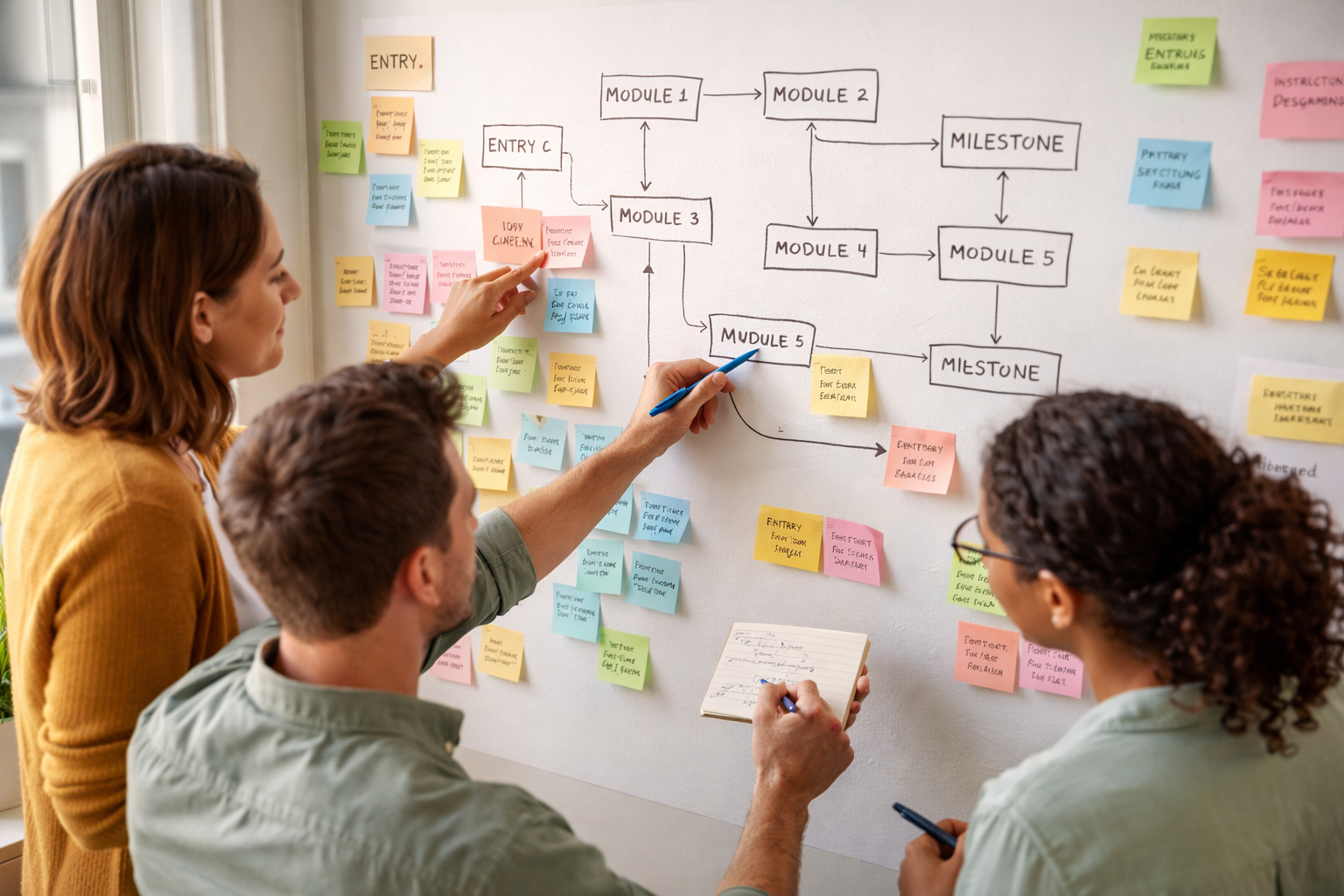
Designing learner journeys means thinking beyond isolated lessons to the full experience learners will follow. It begins with clear outcomes and an understanding of how learners will move from curiosity to capability. Well-planned journeys reduce confusion, increase motivation, and make progress visible and measurable. This article outlines practical design choices that support consistent engagement and meaningful skill development.
Clarify learner goals and entry points
Start by mapping the primary goals learners want to achieve and the likely starting points they bring to the course. A robust needs analysis identifies gaps in skills, preferred formats, and time constraints, and helps prioritize the most impactful content to include. Designing multiple entry points and clear prerequisite guidance prevents frustration and supports learners who arrive with different backgrounds. When goals and entry guidance are explicit, learners can self-assess and choose pathways that align with their needs.
Providing goal-aligned milestones lets learners monitor progress and stay motivated. Short, measurable checkpoints also help instructors detect where learners need support.
Structure learning into focused, sequenced units
Organize content into small, coherent modules that each deliver a distinct outcome and build toward larger competencies. Sequence modules so that foundational concepts appear before applied practice, and keep individual modules short enough for busy learners to complete in a single sitting. Include varied activities—reading, practice, reflection—to reinforce different learning modes and reduce cognitive overload. Clear sequencing and logical scaffolding make it easier to reuse modules across different pathways and to update content over time.
Explicit learning objectives at the start of each unit help learners understand why a module matters. Consistent unit structure also creates predictable study habits.
Support engagement with feedback and flexible assessment
Design assessments that align with stated outcomes and that provide timely, actionable feedback to learners. Use a mix of formative checks and summative tasks so learners can practice without high stakes before demonstrating mastery. Incorporate peer review or automated feedback where appropriate to increase feedback frequency and reduce instructor load. Flexibility in assessment timing and format helps accommodate varied schedules while preserving rigor.
Feedback loops encourage reflection and guide next steps in the journey. When assessments are transparent and supportive, learners persist and refine their skills more effectively.
Conclusion
Intentional learner journeys combine clear goals, sequenced modules, and meaningful feedback to create cohesive programs. Thoughtful design anticipates variation in learner backgrounds and supports progress through measurable milestones. Investing in these elements improves completion, skill transfer, and long-term learner satisfaction.