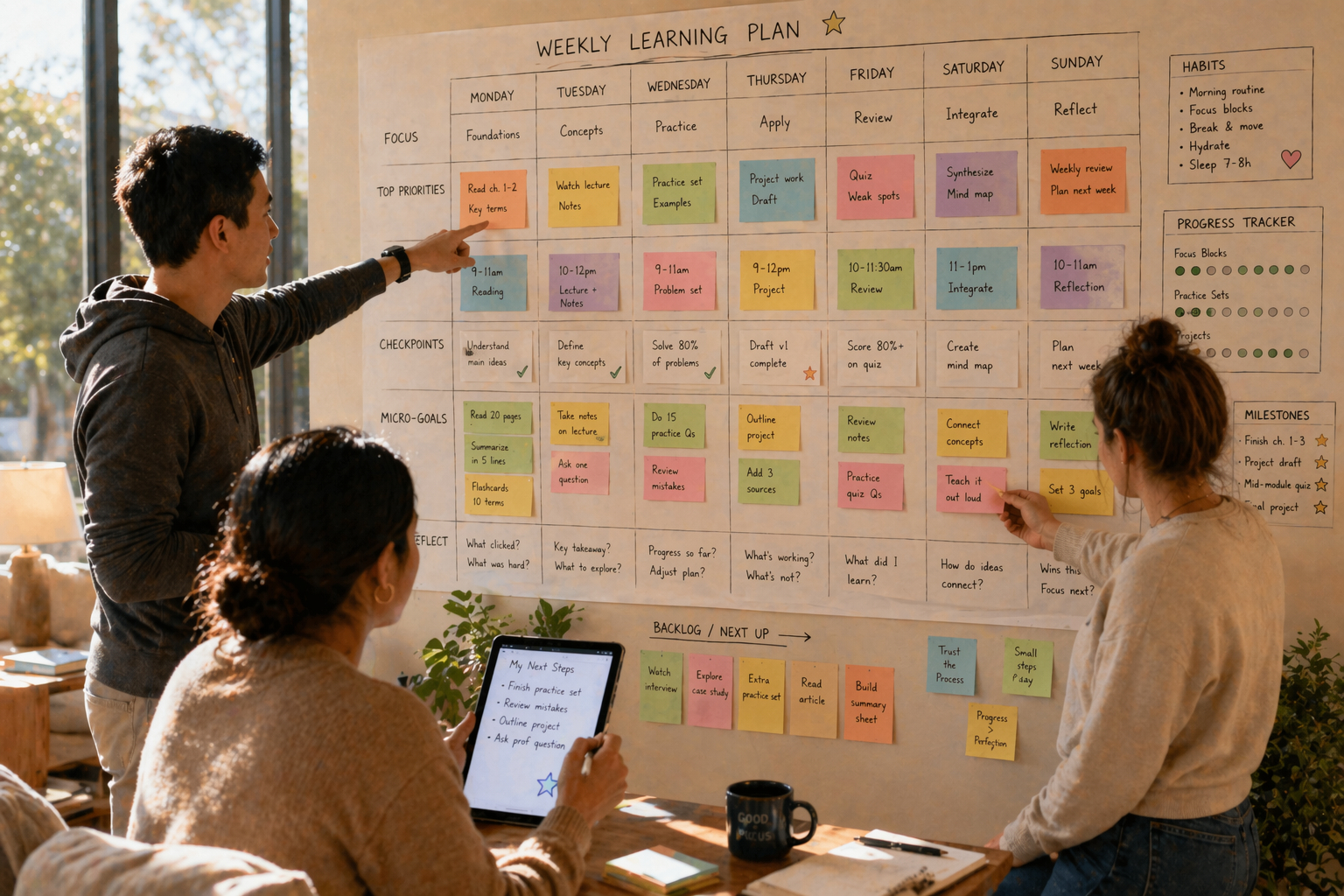
Creating predictable study rhythms helps learners sustain momentum in online courses and builds reliable habits that support mastery. Thoughtful pacing and clear micro-goals reduce cognitive overload and make progress visible, which increases motivation. When rhythm is intentional, course designers can better align activities with realistic learner schedules and competing responsibilities. This article outlines practical steps to design rhythms that promote steady learning and measurable outcomes.
Establishing a Consistent Study Rhythm
Start by mapping a realistic cadence of activities that learners can repeat weekly or biweekly, such as readings, short videos, practice, and reflection. Consistency reduces decision fatigue and signals expected effort, allowing learners to anticipate and commit time. Balance longer deep-work sessions with brief checkpoints to maintain momentum without overwhelming participants. Test the proposed cadence with pilot learners to confirm it fits common time constraints and preferences.
Once a rhythm is validated, surface it clearly in the course layout and onboarding materials so learners understand the expectation. Provide a simple weekly planner or calendar export to help learners adopt the routine quickly and intentionally.
Designing Micro-Goals and Checkpoints
Break larger competencies into micro-goals that align with each study cycle; micro-goals should be achievable within a single session or week. Use short formative assessments, quick projects, or reflection prompts as checkpoints to make progress visible and to offer timely feedback. Visible milestones create early wins, reinforce confidence, and help learners recalibrate effort when needed. Prioritize tasks that produce artifacts or demonstrable improvement so activity feels meaningful.
Integrate automated progress indicators and brief summaries at each checkpoint to keep learners informed about where they are in the sequence. These signals reduce uncertainty and encourage consistent engagement.
Supporting Habits with Tools and Community
Leverage tools like reminders, calendar sync, and task lists to support the rhythm you design; nudges are effective when they respect user preferences and frequency. Encourage social accountability through study groups, peer review windows, or scheduled live check-ins that align with your course cadence. Community elements transform an individual routine into a shared practice, increasing adherence and providing both motivation and diverse perspectives. Facilitate low-friction ways to join peers so community support doesn’t become another barrier.
Finally, collect simple usage data and learner feedback to refine rhythm elements over time. Iteration ensures your pacing continues to match learner needs and evolving course content.
Conclusion
Intentional study rhythms combine clear cadence, micro-goals, and supportive tools to make online learning sustainable. When rhythms are visible and flexible, learners form habits that drive steady progress. Regular review and small experiments keep those rhythms aligned with real learner behaviour.