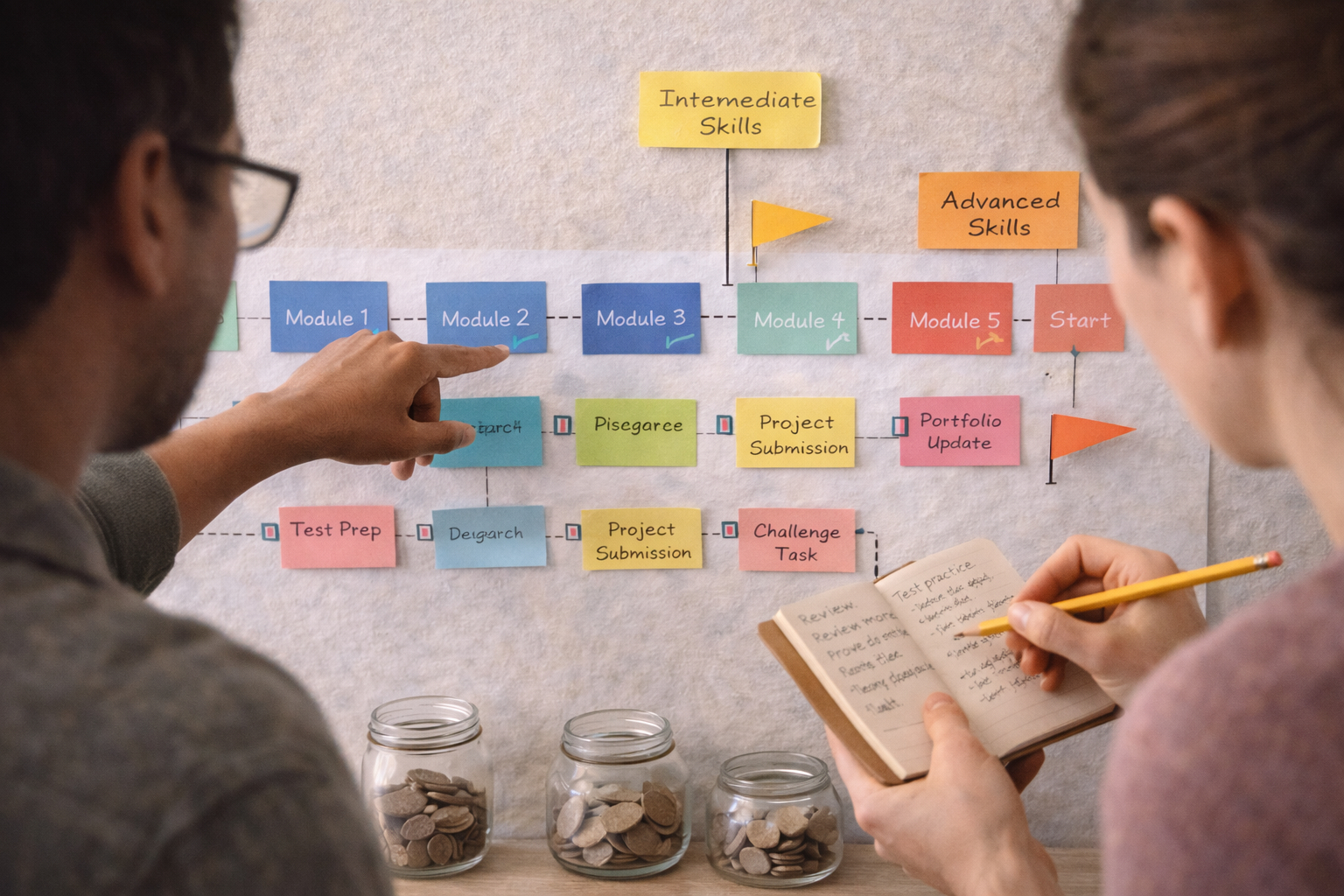
Remote learners succeed when they understand the skills they are building, and when those skills are tied to clear, attainable goals. Transparent pathways translate broad objectives into visible steps and checkpoints, so learners can plan time and resources effectively. Clear progression reduces anxiety, focuses effort, and supports meaningful assessment, and improves instructor ability to target support. Thoughtful design makes transitions between modules predictable and measurable for learners, and smooths the transfer of learning between contexts. This article outlines practical approaches to craft such pathways in online programs, with examples that work at scale and in small cohorts.
Clarify Competencies and Outcomes
Begin by defining competencies in actionable language and aligning them to measurable outcomes. Break abilities into observable skills that learners can demonstrate through tasks or artifacts. Use competency statements that include performance criteria and context so expectations are unambiguous. Engage stakeholders to validate that competencies reflect workplace expectations. This clarity guides content selection, assessment design, and communications with learners.
- Start with a competency statement: action, context, and measurable criteria.
- Create level descriptors such as novice, developing, and proficient to show progression.
Communicate these competencies on syllabi and dashboards. Display progress maps where learners can track completion. Visibility increases learner ownership and planning.
Sequence Learning with Micro-Objectives
Sequence modules around micro-objectives that scaffold from simple to complex tasks. Each micro-objective should be achievable within a short study window and link directly to a competency. Incorporate low-stakes practice and formative checks to reinforce skill acquisition. Design transitions so learners practice transfer across contexts. Incremental progression helps learners experience steady improvement without being overwhelmed.
Design pathways so mastery at one level unlocks the next. Provide optional stretch tasks for learners ready to accelerate. That creates a sense of momentum and purpose.
Support Progress with Feedback and Milestones
Feedback and milestones convert pathways into actionable learning moments. Offer timely, specific feedback that references competency criteria and suggests concrete next steps. Use milestones—such as project submissions or skill demonstrations—to mark meaningful achievement and provide opportunities for reflection. Provide rubrics that map feedback to competency levels. Combining automated checks with instructor comments balances scalability and personalization.
- Formative: quick quizzes, drafts, and peer review for early corrections.
- Summative: capstone projects and recorded demonstrations for final evaluation.
Set clear cadence for feedback and celebrate milestones publicly where appropriate. Encourage peer commentary and reflection after each milestone. These practices reinforce progress and motivate continued engagement.
Conclusion
Transparent skill pathways make remote learning more navigable and effective. They align instruction, assessment, and learner expectations around measurable growth.
Implementing them requires clarity, intentional sequencing, and consistent, timely feedback.