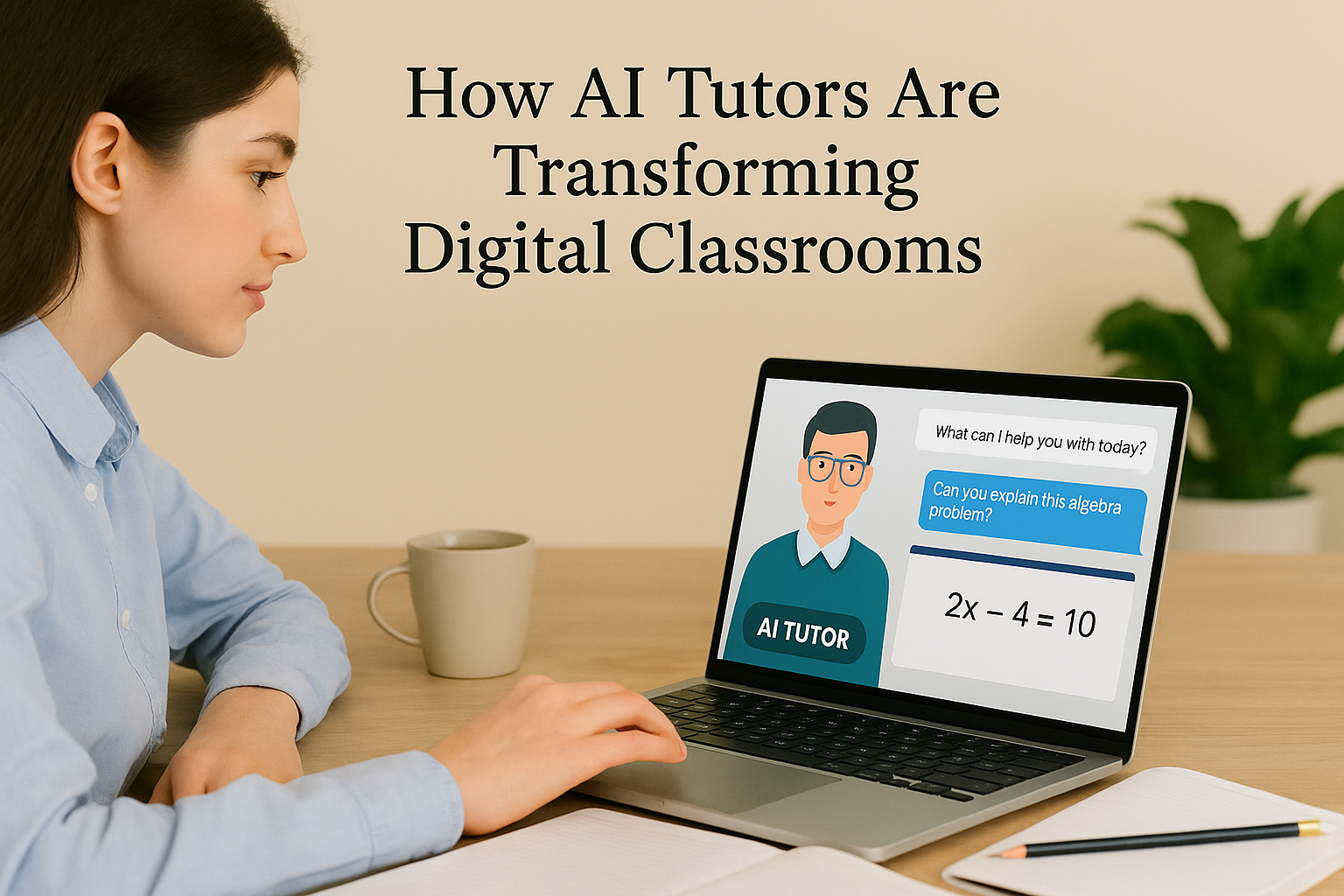
Artificial Intelligence (AI) has stepped into the world of education, changing the way students learn and teachers teach. Among its most impactful innovations are AI tutors—virtual systems designed to personalize learning, provide instant feedback, and support students 24/7. These intelligent assistants are making digital classrooms more interactive, adaptive, and efficient, redefining what it means to learn in the modern age.
1. Personalized Learning for Every Student
AI tutors excel in tailoring lessons to each student’s learning style and pace. By analyzing performance data and engagement levels, they can adjust difficulty, recommend topics for review, and provide additional practice where needed. This level of personalization helps students grasp complex concepts faster while boosting confidence and retention.
2. Instant Feedback and Continuous Support
One of the major advantages of AI tutors is their ability to deliver instant feedback. Unlike traditional classroom settings where students may wait hours or days for evaluation, AI systems immediately identify errors and explain corrections. This real-time feedback keeps learners engaged and helps them improve continuously without frustration or delay.
3. Empowering Teachers, Not Replacing Them
AI tutors are not meant to replace human educators but to complement them. By automating repetitive tasks such as grading quizzes or tracking progress, teachers can focus more on mentorship, creativity, and emotional support. This partnership creates a more balanced and effective educational environment where technology enhances human teaching rather than competes with it.
4. Making Education Accessible Anytime, Anywhere
AI-powered learning platforms break geographical and time barriers. Students from remote areas or different time zones can access tutoring sessions, lessons, and assessments on-demand. This accessibility ensures that learning continues seamlessly outside traditional classroom hours, making education truly global and inclusive.
5. Encouraging Active and Engaging Learning
Through gamification, voice interaction, and adaptive questioning, AI tutors make learning more interactive. Students can engage with lessons like a conversation, making education feel less like memorization and more like exploration. Such engagement drives curiosity, creativity, and critical thinking—skills vital for the future workforce.
Conclusion
AI tutors are revolutionizing digital classrooms by personalizing education, enhancing accessibility, and empowering both teachers and learners. As technology evolves, these intelligent systems will continue to bridge learning gaps and make education more dynamic and inclusive. The future classroom isn’t just digital—it’s intelligent, adaptive, and designed around the learner.