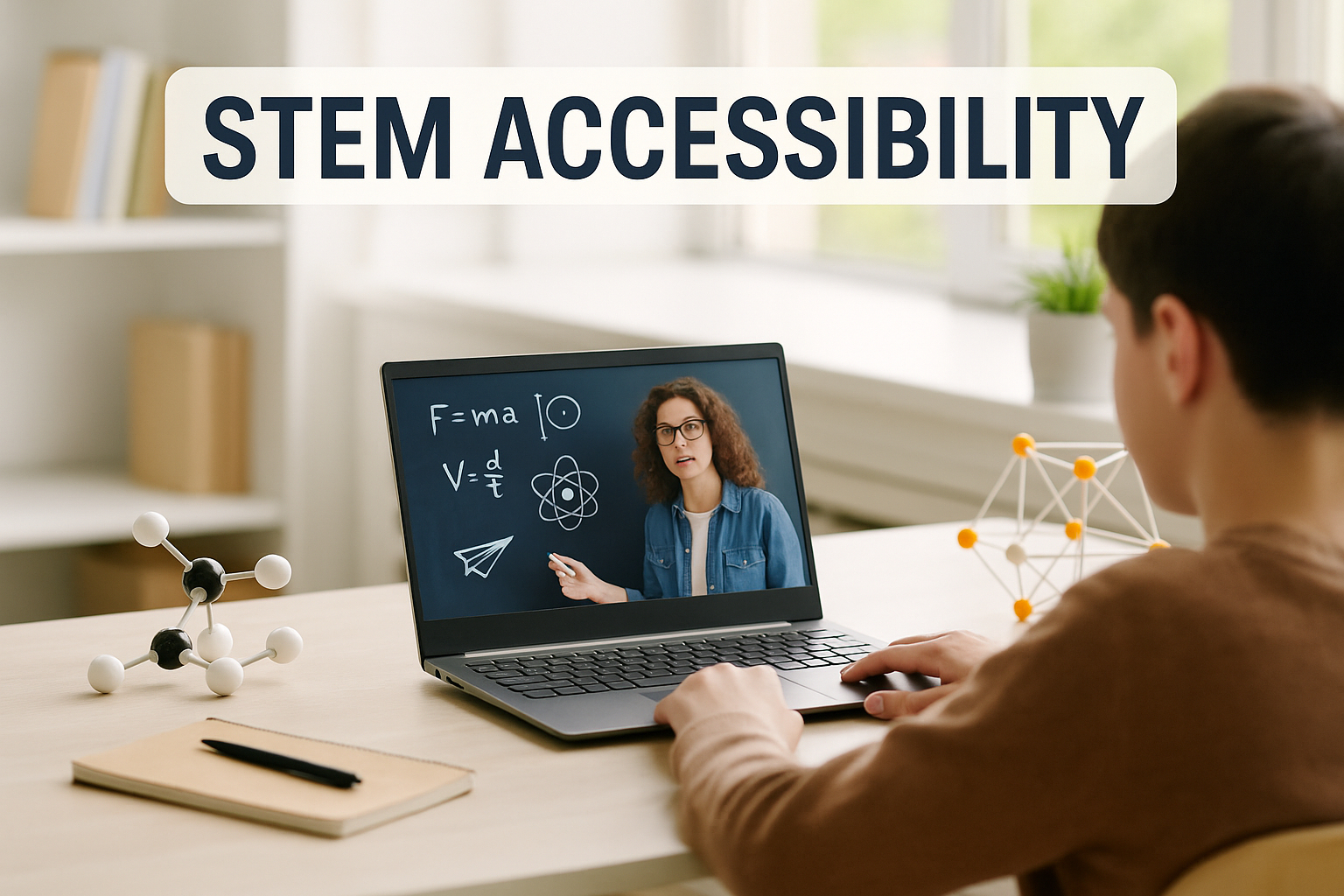
Online education is breaking down long-standing barriers in science, technology, engineering, and mathematics (STEM), making these fields more inclusive and attainable for learners everywhere. Through flexible digital platforms, interactive tools, and global access to high-quality resources, students who once struggled to engage with STEM now have new pathways to explore, learn, and succeed. As technology continues to advance, online education is reshaping the future of STEM learning with greater equity and opportunity.
Expanding Access to Quality STEM Resources
In many communities, access to advanced STEM materials or experienced instructors is limited. Online platforms bridge this gap by offering high-quality courses, virtual labs, and simulations that replicate real-world experiments. Students can explore physics, coding, engineering, or robotics from any location, giving them the chance to learn from experts and access resources that might not exist in their local schools.
Supporting Individual Learning Styles
STEM subjects often involve complex, abstract concepts that require visual and hands-on learning. Online tools provide animations, 3D models, simulations, and interactive exercises that help make these topics easier to understand. Students can pause, replay, or explore concepts at their own pace, creating a personalized learning environment that supports deeper comprehension and confidence.
Making STEM More Inclusive for Underrepresented Groups
Online education opens doors for learners who may face barriers in traditional classrooms, including women, working professionals, and individuals from rural or underserved areas. Digital STEM programs often offer mentorship, community support, and flexible schedules that make participation more accessible. This inclusivity encourages more diverse voices to enter STEM fields, contributing to innovation and representation.
Encouraging Real-World Skill Development
Digital platforms teach practical skills that align with modern STEM careers. Coding bootcamps, virtual robotics challenges, and data science projects give learners hands-on experience with tools used in professional environments. Many platforms also connect learners with industry mentors or real-world projects, helping them build portfolios that strengthen future career opportunities.
Conclusion
Online education is making STEM more accessible by expanding access to resources, supporting diverse learning styles, and fostering inclusivity. Through flexible digital tools and interactive platforms, learners gain opportunities to explore STEM fields with confidence and curiosity. As online education continues to evolve, it will play an even greater role in shaping a skilled, diverse, and empowered STEM workforce.