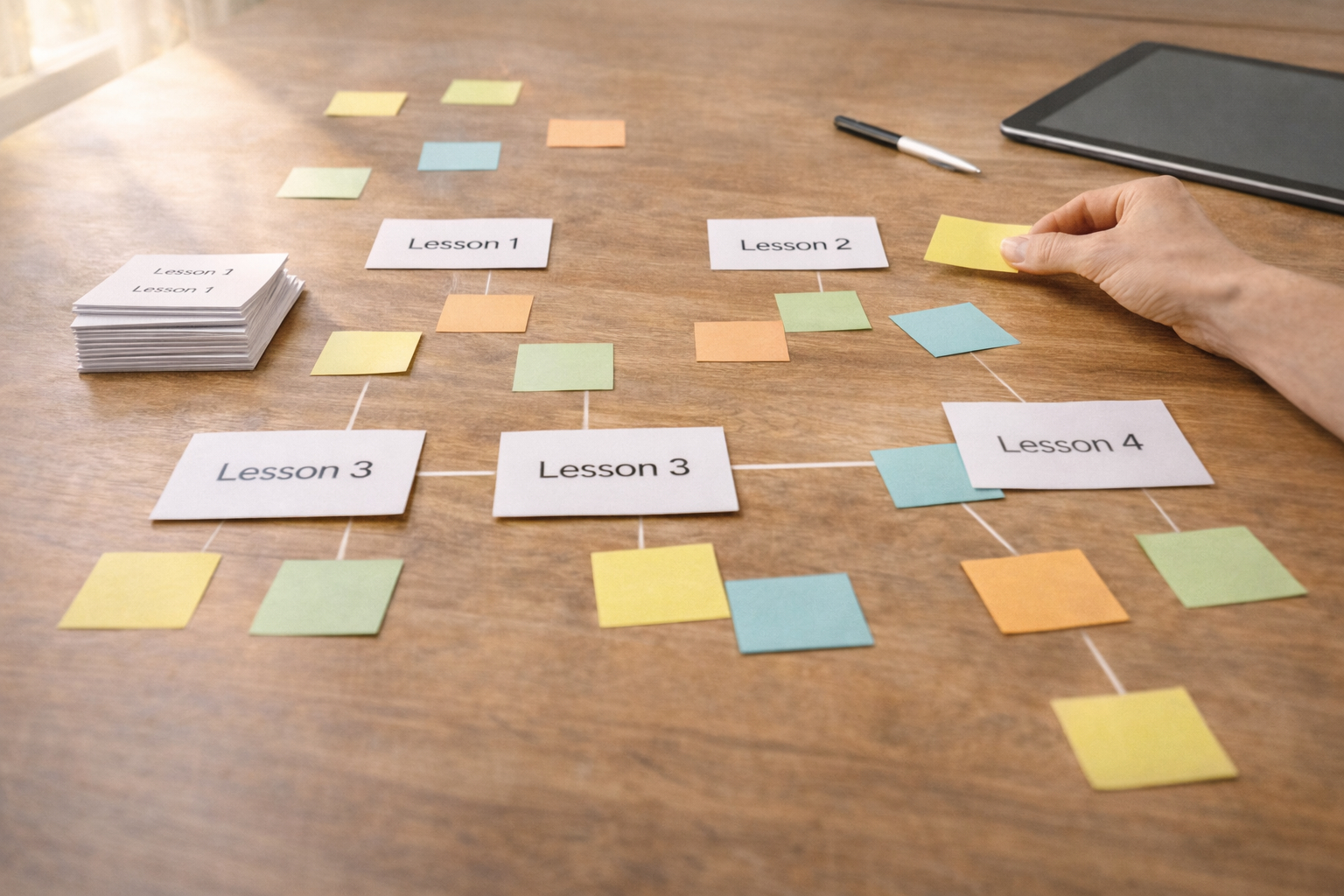
Adaptive online courses help learners progress at their own pace by responding to individual needs and performance. Building courses with flexibility in mind improves engagement and retention across diverse learner profiles. This article outlines practical steps to design adaptive experiences that scale without adding undue complexity. Readers will find actionable ideas for content structure, assessment, data use, and learner support.
Plan for learner variability
Start by mapping learner goals, prior knowledge, and common barriers so your course can address different starting points. Create profile-based pathways that adjust content depth or sequence depending on a learner’s skill level. Consider personas and scenario-driven flows to anticipate typical learning journeys and friction points.
Document decision rules for branching and remediation so adaptations remain consistent and measurable. Clear planning reduces development overhead and keeps the learner experience coherent across paths.
Design modular content and microlearning units
Modularity makes it easier to recombine topics into personalized sequences without duplicating effort. Break lessons into short, focused units that target single skills or concepts and allow targeted remediation. Use clear learning objectives and consistent metadata to enable automated selection or instructor curation.
Smaller units also support mobile and microlearning habits, making it simple for systems to surface just the right content when learners need it most. This approach improves reuse and long-term maintainability.
Use formative assessments and branching logic
Incorporate low-stakes quizzes, scenario tasks, and reflective prompts to gather evidence of learning frequently. Design branching logic that routes learners to practice, review, or enrichment based on assessment results. Ensure feedback is specific and actionable so learners understand next steps.
Automated diagnostics work well for common misconceptions, while instructor reviews can target complex outcomes. Balance automation with human oversight for richer guidance.
Leverage learner data and analytics
Collect and analyze engagement and performance data to inform personalization rules and continuous course improvement. Track metrics like time on task, assessment patterns, and resource usage to identify where learners struggle or disengage. Use dashboards to surface trends and prioritize iterative refinements.
Respect privacy by minimizing data collection to what’s necessary and by communicating how insights will be used. Ethical analytics builds trust and yields more reliable personalization.
Support community and human interaction
Adaptive systems should complement, not replace, social learning and instructor presence. Facilitate peer feedback, group activities, and live check-ins that adapt to cohort needs or individual requests. Provide clear channels for help and encourage mentors to use analytics to target outreach.
Combining adaptive content with human connection creates more motivating and effective learning experiences for diverse learners.
Conclusion
Adaptive courses require thoughtful planning, modular design, and ongoing measurement to succeed. When assessments, data, and human support work together, personalization becomes scalable and impactful. Start small, iterate quickly, and center the learner in every design decision.
Related Articles



Recent Posts

Designing Compact Choice Menus to Foster Student Decision-Making
Teaching Students to Sequence Tasks for Deeper Engagement
Practical Classroom Methods for Teaching Strategic Study Prioritization
Translate Everyday Work into Clear Professional Evidence
A Practical Process for Building Portable Career Proofs


