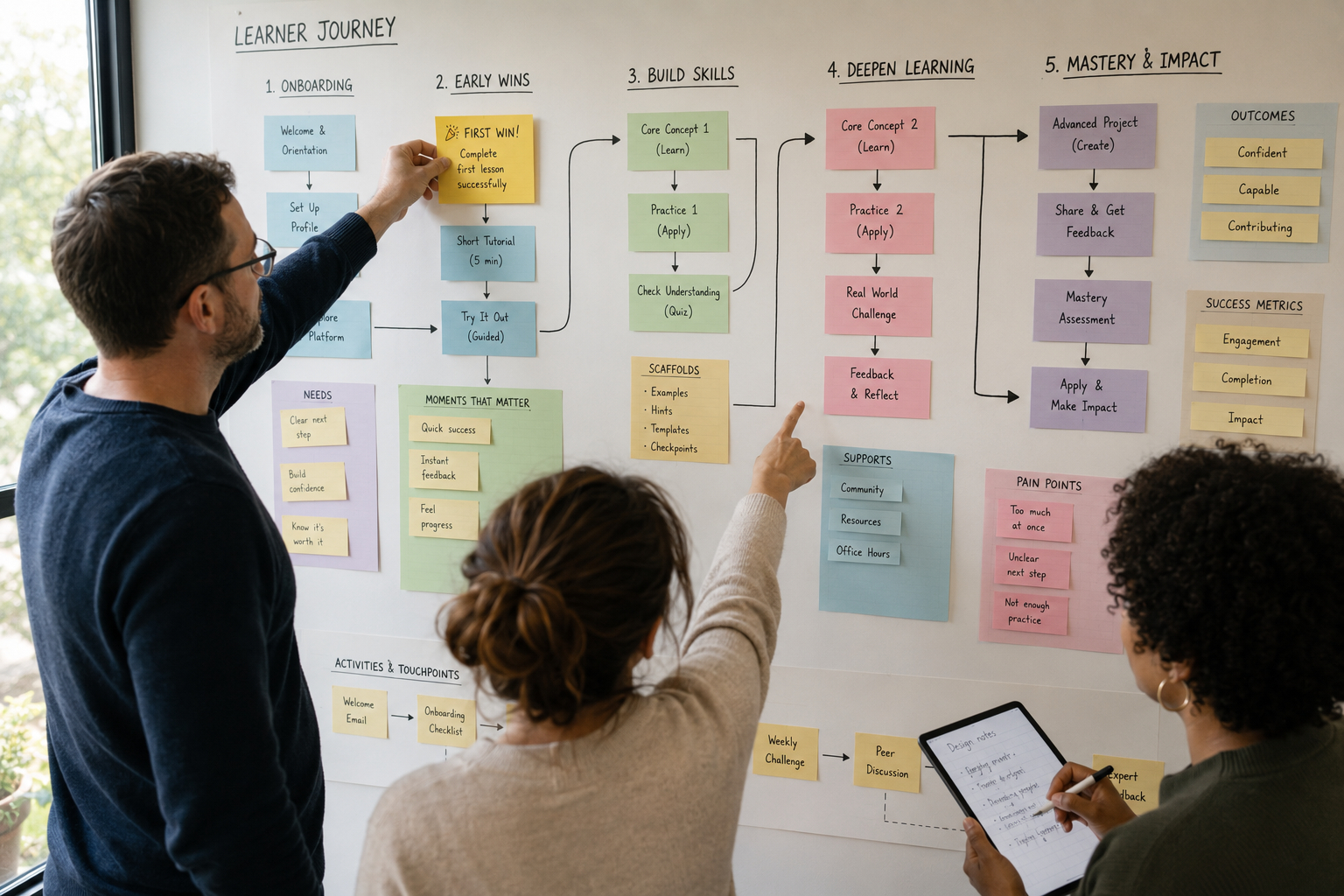
Creating a cohesive online learning ecosystem starts with an intentional map of how learners move through content, activities, and support. A well-mapped journey helps designers spot friction, highlight key milestones, and align experiences with real learner goals. This introduction outlines practical strategies to translate a learner-centered map into a functioning program that supports retention and skill transfer. The steps below are designed for teams building modular courses, professional development tracks, or continuing education programs.
Clarify learner goals and milestone signals
Begin by defining the outcomes learners actually need, not just what the curriculum covers. Translate high-level objectives into observable milestones learners can recognize and instructors can measure. Identify early wins that validate progress and create signals—badges, short assessments, or checklist items—that sustain momentum across the journey. Clear signals reduce ambiguity and help learners prioritize study time.
When goals and signals are explicit, learners gain agency and teams can design targeted supports that match each milestone.
Align experiences and scaffolds to the map
Once milestones exist, align content, activities, and assessments so every element advances learners toward the next step. Sequence tasks from simple to complex and provide scaffolds—templates, worked examples, and micro-projects—so skill transfer becomes visible. Incorporate low-stakes practice and spaced retrieval to strengthen retention while keeping cognitive load manageable. Alignment ensures progression feels natural rather than fragmented.
- Core content that teaches concepts
- Micro-practice to apply skills
- Reflection prompts to deepen understanding
Thoughtful sequencing and scaffolds make it easier for busy adults to integrate learning into real work and life contexts.
Sustain engagement with feedback loops and community
Design feedback mechanisms that are fast, specific, and actionable so learners can adjust quickly. Combine automated checks with peer review and instructor comments to create layered feedback that scales. Encourage micro-communities or cohort touchpoints to turn isolated tasks into social learning opportunities and to provide accountability. Regular, meaningful feedback keeps momentum steady across longer programs.
Feedback and community elements turn a static map into a living ecosystem that adapts to learner needs.
Conclusion
Map learning journeys with clear milestones, aligned content, and layered feedback. Keep signals visible and supports scaffolded to reduce friction and accelerate progress. When designed this way, online ecosystems foster consistent engagement and meaningful skill transfer.