Adult learners bring diverse goals and time constraints, so program design must respect their contexts.
Clear outcomes, flexible pacing, and practical alignment with workplace skills help learners see value quickly.
When objectives and assessments are tightly connected, learners can track progress and stay motivated.
This article outlines pragmatic steps to build online programs that prioritize measurable growth and sustained engagement.
Practical examples and clear feedback loops turn design choices into demonstrable learner outcomes.
Understanding Learner Needs
Start by mapping the target audience’s motivations, prior knowledge, and barriers to participation. Use surveys, interviews, and learner personas to capture patterns in experience and availability. Prioritize outcomes that reflect real-world tasks and career advancement rather than abstract competencies. Examine enrollment timing and preferred formats to reduce friction. This clarity shapes content scope, assessment types, and support structures.
Aligning program milestones with tangible workplace applications increases relevance. Communicate pathways clearly so learners can plan and commit. Gather ongoing feedback to refine milestones.
Designing Modular, Competency-Based Units
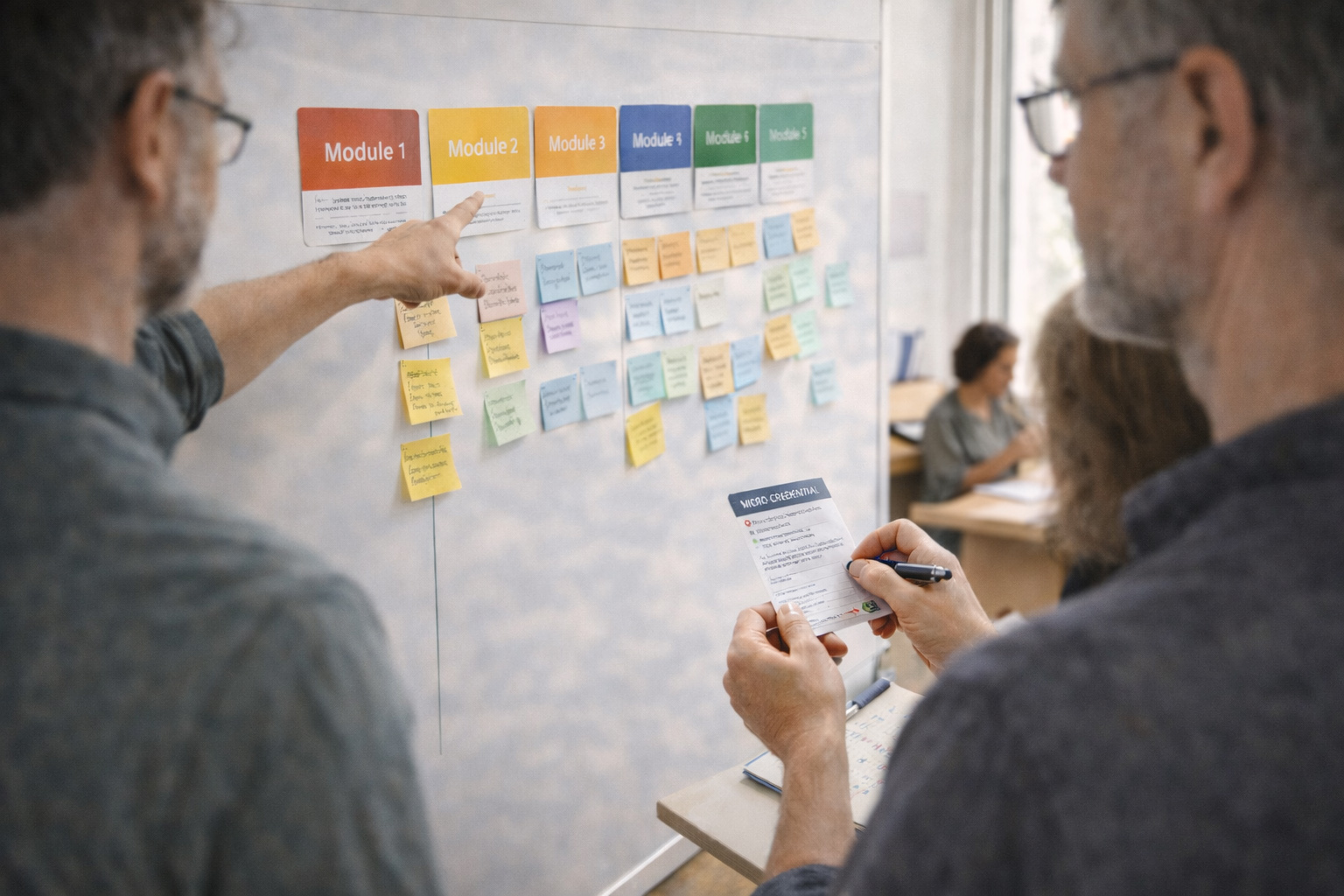
Break the curriculum into concise, competency-aligned modules that each teach and assess a specific skill. Modules should be short enough for busy adults yet substantial enough to demonstrate mastery. Build assessments that require authentic application, such as projects or case analyses, not just recall. Design feedback loops that let learners iterate on skills quickly. Make progression flexible so learners can enter, pause, and resume without losing momentum.
- Define one primary measurable outcome per module and link it to workplace performance.
- Include formative checks with actionable feedback to guide revision and improvement.
- Offer multiple assessment pathways, including project-based options and reflective assignments.
Reusable modules support scalability and personalization. Clear rubrics and examples help learners understand expectations. Track module uptake and completion to inform continuous improvement.
Supporting Engagement and Assessment
Sustained engagement combines relevant content, timely feedback, and community opportunities. Schedule low-stakes interactions like peer review and short live Q&A sessions to maintain momentum. Leverage analytics to identify struggling learners and intervene early with targeted resources. Clarify the instructor and mentor roles to balance guidance with autonomy. Offer badges or micro-credentials to recognize completed competencies and motivate continuation.
Balanced assessment practices promote skill transfer and retention. Ensure support channels are visible and responsive to reduce attrition. Reward peer support to build sustainable learning communities.
Conclusion
Focusing programs on measurable outcomes helps adult learners connect study to tangible advancement.
Modular design, authentic assessment, and proactive support create a flexible yet coherent learning journey.
Implementing these elements improves completion, skill mastery, and long-term learner success.