Designing online courses requires clarity, structure, and an eye toward scalability.
A practical framework helps instructors translate subject expertise into consistent learning experiences.
This article outlines approaches to outcomes, engagement, assessment, and iteration for online programs.
Readers will gain actionable steps to build courses that support diverse adult learners and scale across cohorts.
Clarify learning outcomes and structure
Begin by defining specific, measurable learning outcomes that align with real-world skills and the assessments you plan to use.
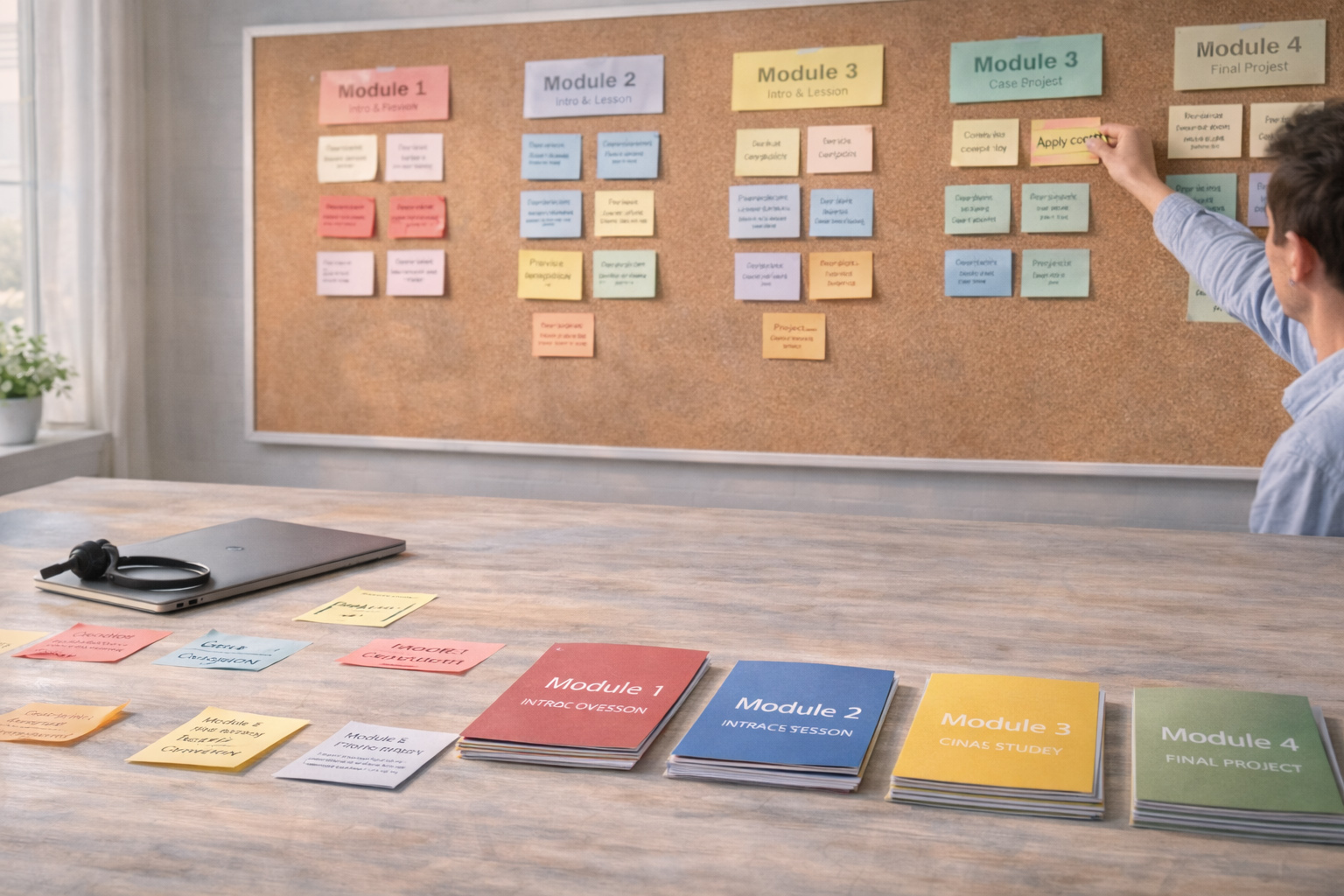
Organize content into modular units that map directly to those outcomes and can be reused, updated, or reordered as needed.
Keep modules focused and time-bound so learners can progress in predictable increments while demonstrating mastery through cumulative activities.
Tie outcomes to industry standards or competency frameworks to make credentials meaningful and portable across contexts.
Modularity makes maintenance simpler and supports personalized pacing.
It also reduces development time for future cohorts and enables easier quality control across instructors.
Enhance learner engagement
Engagement depends on varied interaction methods: concise multimedia explanations, applied projects, structured peer discussion, and visible instructor presence.
Incorporate active learning tasks that require reflection, practice, and application rather than passive content consumption.
Use short formative checks and regular milestones to sustain motivation and provide immediate, actionable feedback.
Leverage analytics to identify struggling learners early and offer targeted supports or optional remediation paths.
- Micro-assignments to practice skills
- Scheduled peer reviews for accountability
- Short videos with transcripts for accessibility
These tactics work together to sustain participation and deepen comprehension across varied learning preferences.
They also create multiple paths for learners to demonstrate progress and stay engaged through practical work.
Assess progress and iterate
Design assessments that mirror authentic tasks learners will perform on the job, and build rubrics to ensure consistent grading and clear expectations.
Blend formative assessments, peer review, and summative evaluations so learners can monitor growth and instructors can identify gaps quickly.
Collect learner feedback alongside performance metrics to guide a continuous improvement cycle for content, assessments, and delivery mechanisms.
Regular iteration keeps courses current and effective, supporting retention and the transfer of learning to real contexts.
Leverage technology and accessibility
Choose platforms that support modular content, integrated assessments, and learner analytics to streamline administration and reporting.
Ensure materials follow accessibility best practices with captions, transcripts, and readable layouts that accommodate diverse needs.
Integrate tools that enable both synchronous check-ins and asynchronous collaboration so learners can engage on flexible schedules while still receiving meaningful interaction.
Prioritize interoperability so content can migrate between systems without losing structure or learner data.
That approach reduces technical debt and improves continuity for learners moving across programs.
Conclusion
Building scalable online programs starts with clear outcomes, thoughtful modular design, and engagement strategies that promote active learning.
Ongoing assessment and learner feedback create a meaningful cycle of improvement that sustains course quality over time.
Applied consistently, these frameworks help educators deliver reliable, learner-centered online experiences that scale effectively.
Related Articles



Recent Posts

Structured Student Planning for Consistent Independent Learning
Chunked Task Planning to Strengthen Student Focus and Progress
Scaffolding Choice: Building Student Skill Through Small Decisions
Turning Work Routines into Strategic Career Momentum
Design Intentional Work That Demonstrates Career Potential


