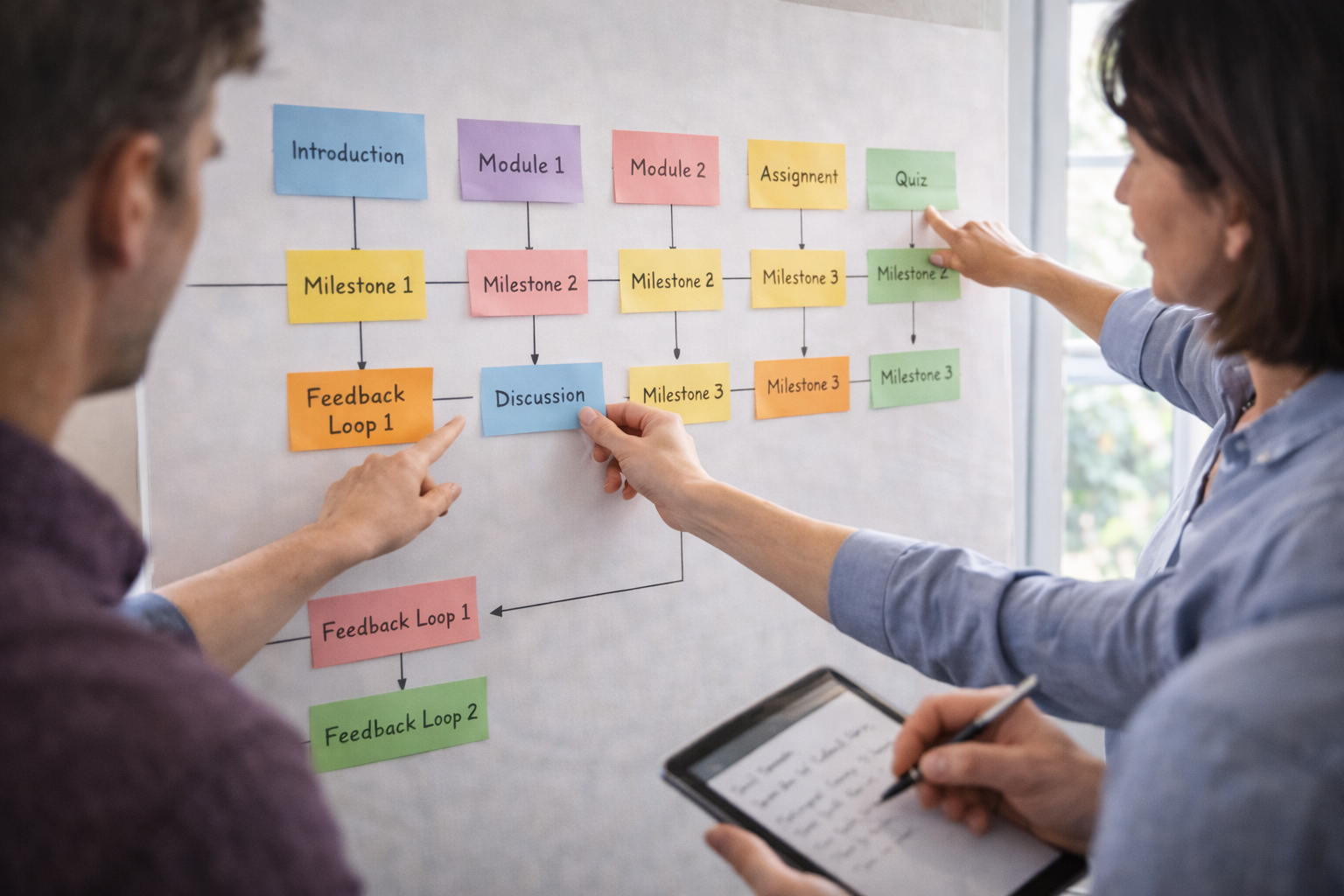
Effective online learning requires thoughtful structure, purposeful interaction, and clear milestones. Designers must balance flexibility with coherent pathways that guide learners from motivation to mastery. When courses are built around measurable objectives and engaging activities, completion and retention improve. This article outlines practical methods to refine online learning journeys for adult and continuing learners. Practical tweaks grounded in learner behavior make the most difference.
Defining Goals and Learning Sequences
Begin by articulating specific, measurable learning objectives that map to real-world skills. Break content into focused modules that build progressively, so each unit prepares learners for the next challenge. Consider short, achievable lessons that reduce cognitive load and encourage steady progress. Clear sequencing helps learners see how tasks contribute to broader goals and maintains momentum. Include milestones and quick wins so progress is visible and rewarding.
A strong objective-based structure also simplifies assessment design. When outcomes are explicit, both instructors and learners can track growth effectively. This clarity reduces wasted effort on irrelevant content.
Designing Interaction and Community
Engagement hinges on varied interaction types: instructor-led explanations, peer discussions, and hands-on practice. Blend synchronous opportunities with asynchronous forums to accommodate diverse schedules and learning preferences. Use prompts and scaffolded activities that invite reflection and application rather than rote responses. Meaningful interaction combats isolation and deepens understanding. Design prompts that require application to real tasks and provide model answers.
- Short video demos and guided practice.
- Weekly reflective prompts tied to objectives.
- Small peer review groups with clear rubrics.
Prioritize quality over quantity in discussions and provide clear expectations for participation. Small-group projects or peer review can significantly increase accountability and connection. Set minimum expectations and offer exemplar submissions.
Feedback, Assessment, and Adaptive Support
Timely, actionable feedback is central to learner improvement and confidence. Design assessments that align with objectives and include formative checks to catch misconceptions early. Leverage data on performance to offer adaptive resources or remedial pathways where needed. Automated quizzes, instructor comments, and peer feedback together create a balanced feedback ecosystem. Ensure feedback is specific, prioritized, and linked to next steps.
Adaptive supports keep learners from drifting off course while allowing advanced learners to accelerate. The goal is continuous improvement, not gatekeeping. Use dashboards to surface progress and suggest targeted interventions.
Technology Choices and Accessibility
Choose tools that support varied media, analytics, and integration with your LMS. Prioritize platforms that enable mobile access, offline study, and reasonable load times for learners with limited bandwidth. Accessibility features like captions, clear navigation, and keyboard support expand reach and reduce barriers. Balance innovation with reliability to keep the learner experience smooth.
Test tools with actual learners and iterate on usability issues. Small technical improvements can substantially increase completion rates.
Conclusion
Strengthening online learning journeys is an intentional process that combines clear objectives, varied engagement, and responsive feedback. Small, evidence-informed design choices add up to measurable improvements in completion and satisfaction. Start with one change and iterate based on learner data.