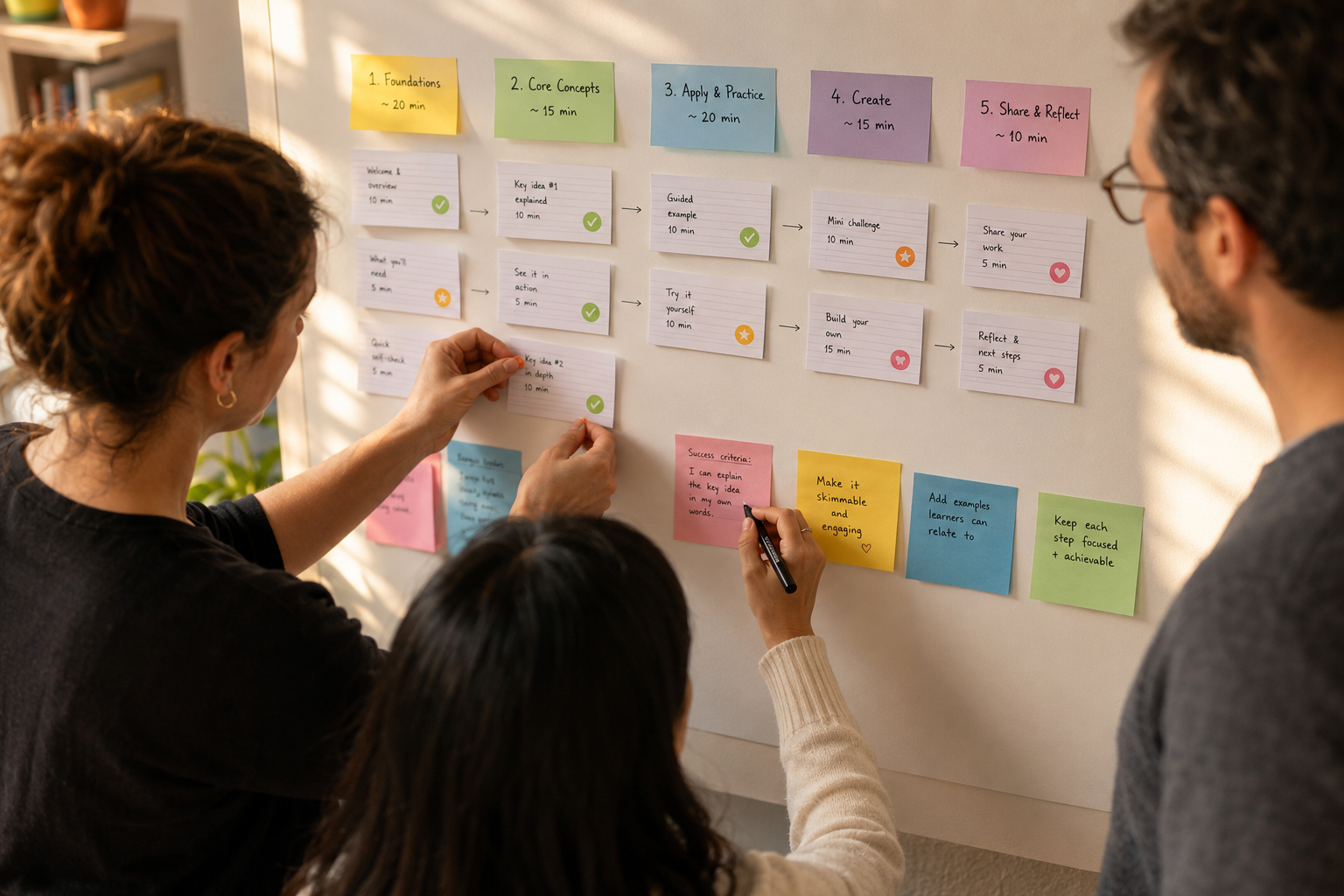
Adult learners often juggle competing priorities, so course progress needs to feel achievable and transparent. Clear, bite-sized milestones reduce friction and help learners maintain momentum over weeks and months. When milestones align with meaningful skills, they reinforce motivation and signal competence gains. This article outlines design principles and practical tactics to structure progress in self-paced digital programs.
Design Principles
Begin by mapping learning outcomes to small, observable steps that can be completed in short study sessions. Each step should have a clear criterion for success so learners know when they’ve made progress and why it matters. Design steps to alternate practice, reflection, and application so progress feels both steady and relevant. Prioritize predictability: consistent step length and feedback cadence reduce decision fatigue and increase completion.
Keep the learner’s context in mind and avoid one-size-fits-all pacing. Make it easy to resume by surfacing the next logical action upfront. These choices make progress feel manageable and respectful of busy schedules.
Practical Tactics
Use micro-tasks that take 10–20 minutes and bundle related activities into short episodes. Provide immediate, low-effort feedback — simple confirmations, rubrics, or model answers — so learners can validate effort quickly. Offer optional stretch activities for deeper practice but keep core milestones focused and attainable. Visual progress bars and checklists work best when tied directly to meaningful learning outcomes rather than arbitrary clicks.
Structure tasks so that each completed item unlocks a clear benefit, such as a short badge, a sample portfolio artifact, or a reflection prompt. These small rewards anchor motivation without overwhelming the learner.
Measuring and Adapting
Track both completion metrics and learning signals like assessment accuracy or time-on-task to understand whether steps are too easy or too hard. Segment data by learner characteristics to spot patterns that suggest redesign, such as repeated drop-off at a specific milestone. Use quick A/B tests to trial shorter tasks or alternative feedback styles and measure completion and comprehension outcomes. Regularly review qualitative feedback from learners about where they felt stuck or unclear.
Adapting step size and feedback frequency based on evidence preserves the balance between challenge and attainability. Small, iterative changes keep the course responsive without disrupting existing learners.
Conclusion
Designing attainable progress steps makes courses more humane and effective. Start small, measure what matters, and iterate informed by learner data. Over time these practices build sustainable momentum and genuine skill growth.