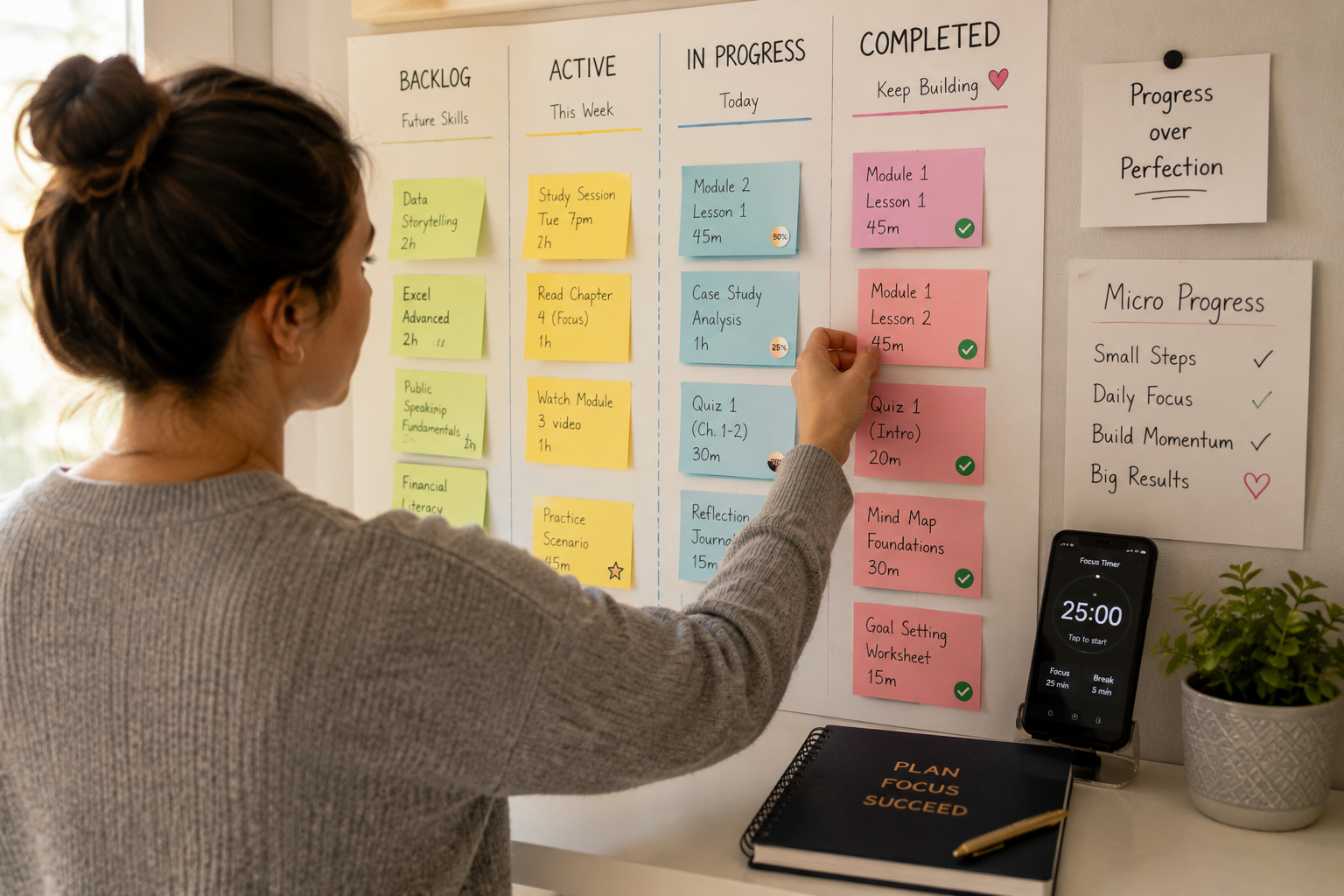
Adult learners juggle work, family, and study, so momentum matters more than pace. Designing course sequences that create frequent, visible wins helps sustain engagement. Small, predictable progress signals reduce overwhelm and make commitments feel achievable. This article outlines practical design choices to keep adult online learners moving forward.
Core principles for momentum design
Begin with clear, short-term targets that map to larger competencies so learners see purpose in each step. Prioritize actions that produce quick, meaningful feedback—micro-assessments, checklists, or guided reflections—that confirm progress. Limit options per module to prevent decision fatigue and scaffold choice as competence grows. These principles help convert episodic effort into a steady learning rhythm.
Design with the learner’s calendar in mind and emphasize consistency over intensity. When momentum is maintained, motivation compounds and retention improves.
Designing micro-progress markers
Create checkpoints that are achievable within a short study session and that clearly demonstrate skill or knowledge gains. Examples include a 10-minute practice, a one-question quiz with rationale, or a brief applied task that produces a tangible artifact. Use descriptive labels for milestones so accomplishments feel specific, not vague. Visual indicators and simple confirmations can amplify the psychological impact of each small win.
Micro-markers also facilitate self-assessment and planning. Learners can use them to predict time needed and maintain realistic expectations.
Scheduling, habit support, and flexibility
Encourage routines by suggesting brief rituals that anchor study—opening notes, a two-minute recap, or a focused practice sprint. Offer flexible windows for deadlines while keeping micro-deadlines frequent to preserve momentum. Provide lightweight planning tools like weekly checklists or time-block templates that fit fluctuating schedules. Balance structure with choice so learners can adapt pathways to their lives without losing forward motion.
Flexibility prevents burnout while routine creates the conditions for momentum to stick. Aim for predictable cadence rather than rigid timing.
Feedback loops and adaptive adjustments
Collect quick signals about progress and confidence to trigger tailored supports: nudges, optional mini-lessons, or peer prompts. Analyze completion patterns to identify where momentum stalls and introduce targeted interventions at those points. Keep feedback actionable and focused on the next step rather than summative judgments. Continuous, formative feedback keeps learners oriented toward immediate improvements.
Adaptive responses sustain engagement by meeting learners where they are. Small course corrections preserve momentum and nurture mastery over time.
Conclusion
Momentum-based course design centers on frequent, visible progress and practical supports that fit adult lives. By breaking goals into short, meaningful steps and linking feedback to next actions, courses promote sustained engagement. Thoughtful scheduling, micro-markers, and adaptive feedback together keep learners moving toward mastery.