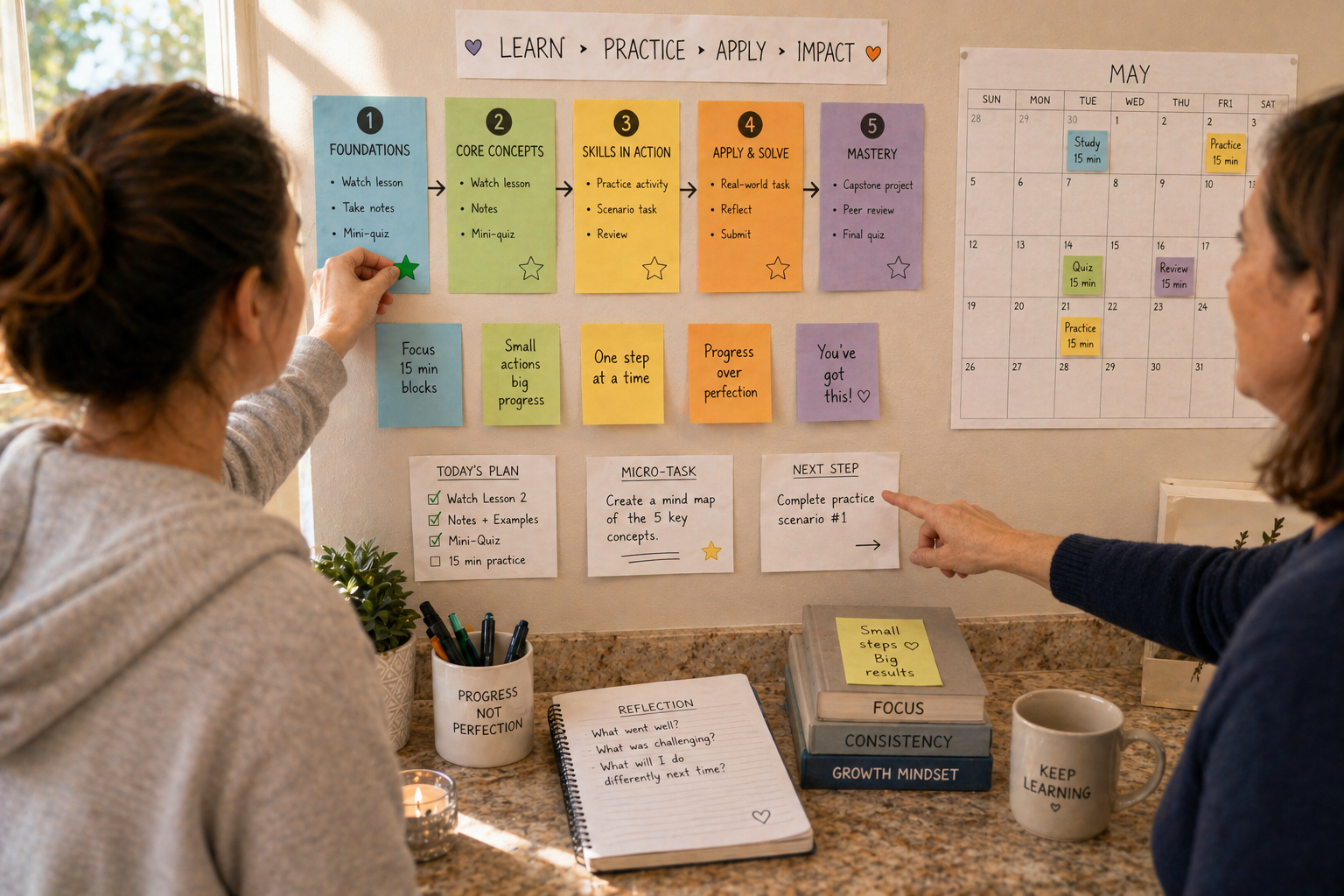
Well-placed checkpoints can transform a scattered course into a coherent learning path that sustains momentum. They help learners recognize progress, reduce overwhelm, and connect short tasks to long-term outcomes. Thoughtful checkpoint design balances frequency, clarity, and meaningful feedback to keep engagement steady. This article outlines practical approaches to structure checkpoints that support consistent study habits and measurable progress.
Why checkpoints influence learner momentum
Checkpoints act as visibility tools that make learning progress tangible and actionable for online learners. When learners see incremental gains, they experience more motivation to continue and are less likely to abandon a course midstream. Well-timed checkpoints also reduce cognitive load by breaking complex goals into achievable steps that guide attention. This combination of clarity and attainability fosters a steady study rhythm and builds confidence over time.
To be effective, checkpoints must be relevant to the learner’s goals and explicitly tied to the skills being developed. Consistency in how and where checkpoints appear helps learners anticipate next steps and manage time more effectively.
Design principles for effective checkpoints
Start by mapping the key competencies learners must demonstrate and place checkpoints at natural transitions between skill clusters. Keep each checkpoint focused on a single objective and design tasks that provide quick, actionable feedback. Use a mix of formative checks, such as quizzes or reflections, and performance-based tasks that simulate real application. Prioritize clarity in instructions and success criteria so learners can self-assess without confusion.
Consider pacing and variety: rotate checkpoint types to maintain interest and avoid repetitive assessments. Make sure each checkpoint contributes to a visible progress record that learners can reference.
Measuring and iterating on checkpoint design
Collect both quantitative and qualitative data to evaluate checkpoint impact, tracking completion rates, time on task, and assessment performance. Pair analytics with learner feedback to surface pain points where checkpoints may be too frequent, unclear, or insufficiently motivating. Use A/B testing on checkpoint timing or format to identify configurations that improve momentum and retention. Iteration grounded in learner behavior ensures checkpoints remain aligned with real needs.
Regular review cycles let designers refine thresholds, update rubrics, and add supportive resources where learners struggle. This continuous improvement approach keeps checkpoints purposeful and learner-centered.
Conclusion
Thoughtful checkpoints turn course structure into a visible pathway and help learners sustain engagement. Design them around clear objectives, timely feedback, and measurable outcomes. Iterative refinement based on learner data will maintain their effectiveness over time.