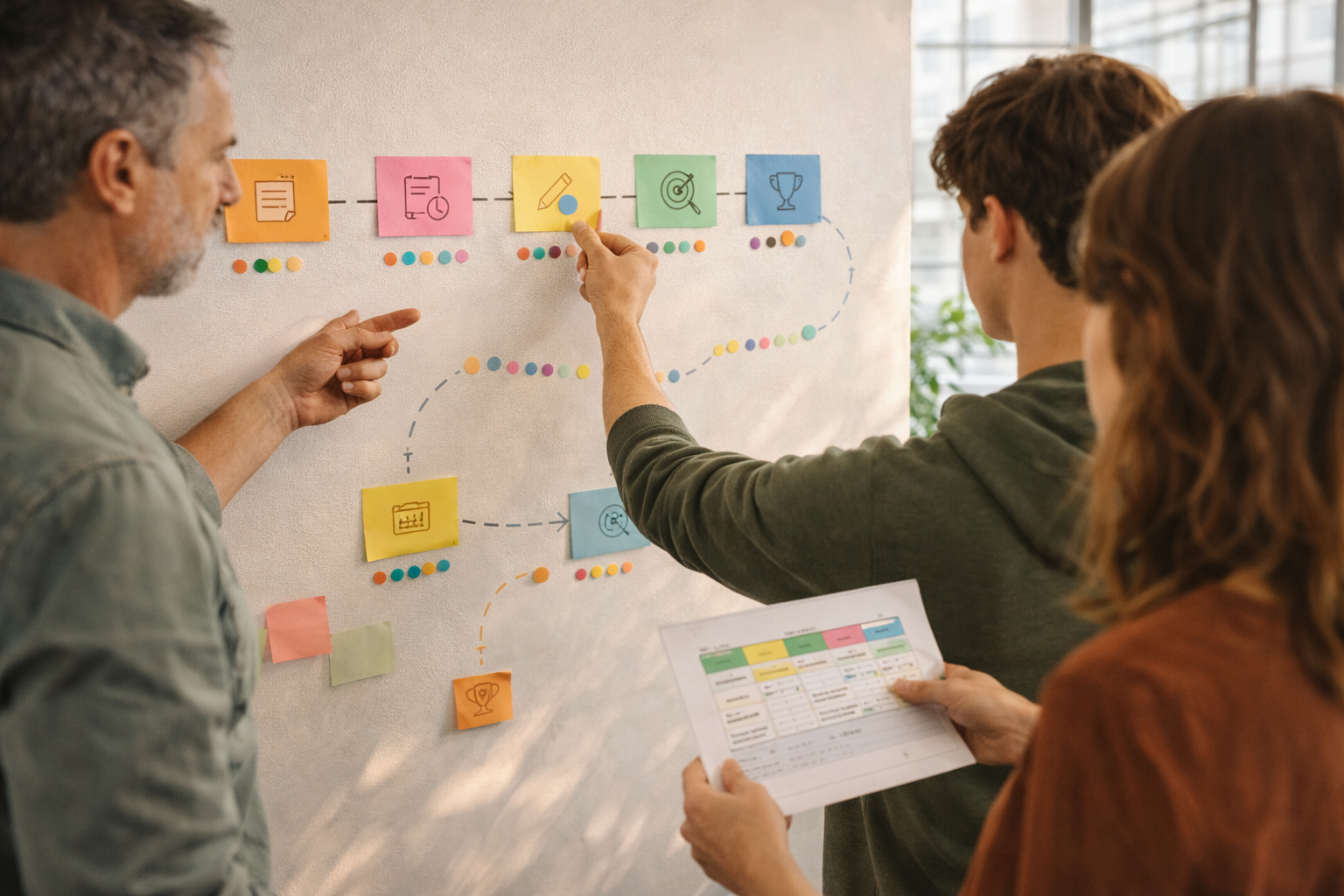
Turning course content into measurable progress starts with clearly stated targets and a focus on observable outcomes.
When learners see what success looks like, motivation and direction improve substantially.
Purposeful milestones help designers pick assessments and learning activities that matter most.
This article describes practical steps to convert content into measurable, actionable learner growth.
Define Clear Milestones
Begin by segmenting the overall learning goal into smaller, time‑bounded milestones that learners can achieve through focused effort. Each milestone should use specific, active verbs and describe a tangible artifact or behavior so instructors and learners share the same expectations. When milestones are short and frequent, progress becomes visible and manageable, reducing overwhelm and enabling targeted practice. Clear milestones also make it easier to prioritize content and allocate instructional time efficiently.
- Break units into bite-sized competencies.
- Phrase milestones with action verbs and success criteria.
- Set realistic timeframes for each checkpoint.
Communicate milestones at the start of the course and repeat them within modules so learners can self-assess regularly. Visual trackers or progress bars reinforce momentum and help learners plan next steps.
Align Assessments with Outcomes
Assessment should directly evaluate the skills described by each milestone rather than test unrelated facts. Design a mix of formative and summative checks that mirror authentic tasks learners will perform, such as short projects, simulations, or applied reflections. Frequent low‑stakes assessments give immediate signals about mastery and guide remediation before high‑stakes evaluations occur. Use rubrics that map criteria to milestone language to make grading decisions transparent and actionable for learners.
- Include brief formative activities after each milestone.
- Use rubrics to connect feedback to specific outcomes.
- Favor performance tasks that mirror real-world application.
Collect assessment data to spot trends and adjust pacing, focusing interventions where multiple learners struggle. This alignment turns grading into a diagnostic tool that supports learning, not just a compliance step.
Support and Feedback Loops
Timely, specific feedback converts assessment results into learning opportunities and helps learners close gaps efficiently. Structure feedback cycles so students receive automated guidance for quick wins and instructor or peer comments for deeper reflection. Encourage guided peer review to scale personalized responses while building critical evaluation skills, and offer targeted coaching for learners who need additional support. Regular reflection prompts help learners internalize feedback and plan corrective actions.
- Provide model answers and exemplar artifacts.
- Schedule short feedback windows to maintain momentum.
- Use guided peer review to expand perspectives.
Document common misconceptions and revise resources to prevent recurring errors. Recognize milestone completions publicly to reinforce progress and sustain engagement.
Conclusion
Translating content into measurable progress requires milestones, aligned assessments, and purposeful feedback.
When these elements work together, learner mastery becomes trackable and actionable rather than vague and delayed.
Start with a single module, iterate based on data, and scale what demonstrably improves outcomes.