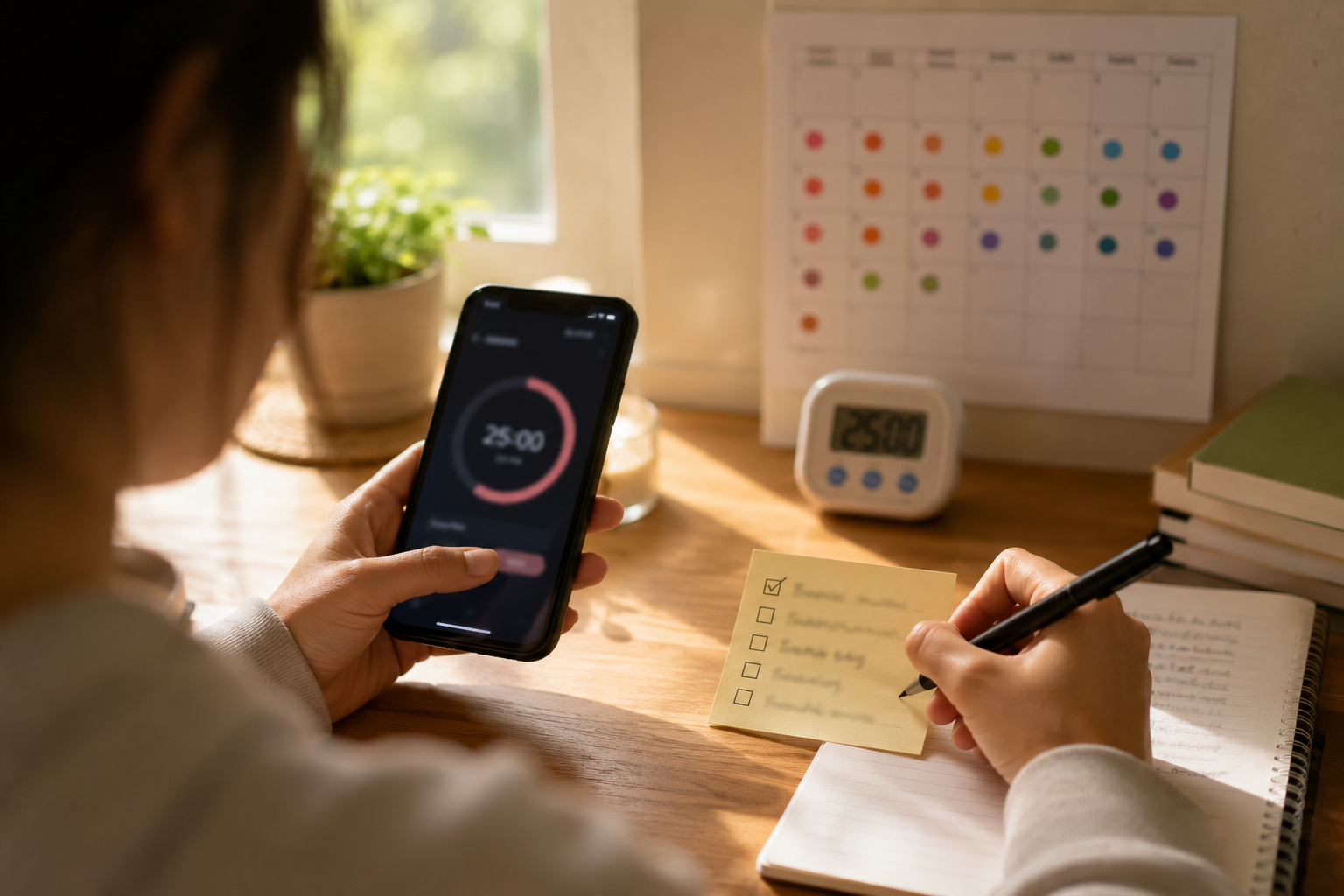
Short, doable tasks help learners start and continue studying regularly. They reduce friction, lower decision costs, and provide quick feedback loops.
For self-paced courses those benefits translate into higher completion and retention. This article explains how to design short-task sequences that create durable study habits.
Why short tasks build momentum
Short tasks create frequent success experiences that reinforce learner identity and confidence. When a student achieves a small goal they generate motivation to tackle the next item. Short tasks also fit into busy schedules, which increases the probability of consistent practice. Cognitive load is reduced because attention is directed at one focused objective at a time.
Use this principle to break larger outcomes into repeatable actions. Repetition of those actions is what converts sporadic effort into routine behavior.
Designing sequences and checkpoints
A sequence should begin with the simplest demonstrable skill and progress in small, logical increments. Each task must have a clear input, expected action, and visible outcome to avoid ambiguity. Checkpoints every few tasks offer learners a sense of mastery and course-correcting feedback. Consider pairing short tasks into daily or weekly micro-sprints that cumulatively build capability.
Keep task durations predictable so learners can plan study windows. Transparent checkpoints maintain momentum and reduce dropout risk.
Integrating cues and measurement
Triggers and cues remind learners to act—a calendar prompt, a progress bar, or a brief email nudge. Simple measurement such as percent complete or streak tracking reinforces progress without overwhelming detail. Feedback should be timely and specific enough to guide improvement but concise to preserve flow. Combine subjective reflections with objective metrics to help learners internalize progress.
Design cues that align with learners’ rhythms and preferences. Regular, low-friction measurement deepens commitment without adding complexity.
Practical implementation tips
Start by auditing a course into meaningful outcome blocks and identifying the smallest testable action inside each block. Draft thirty-minute tasks and then test whether learners can complete them in a single sitting. Label tasks with clear verbs and anticipated time so learners know what to expect and can commit. Experiment with scheduling options such as fixed weekly modules or flexible daily prompts to see which rhythms stick. Collect quick feedback after each module to remove friction and refine task scope.
Small pilots reveal which tasks feel valuable and which must be broken down further. Iterate quickly and prioritize changes that increase completion and perceived relevance.
Conclusion
Short, well-sequenced tasks convert intention into repeatable behavior. Thoughtful checkpoints, cues, and simple metrics sustain momentum over time. When courses prioritize tiny wins, learners are more likely to persist and succeed.