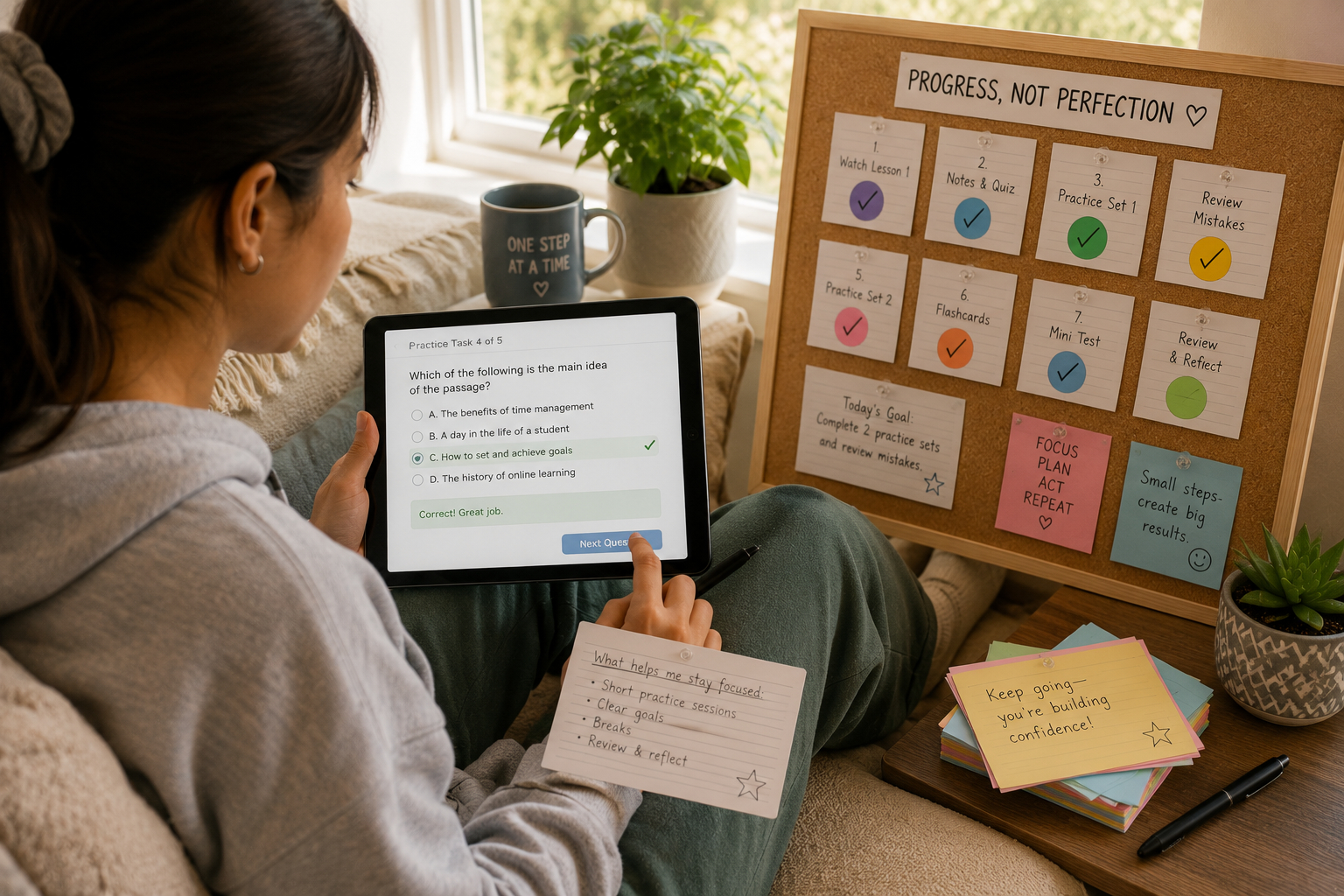
Low-stakes assessments are short, low-pressure activities that help learners practice without fear of major consequences. They reduce anxiety and invite experimentation, which supports steady skill development. When used thoughtfully, these assessments create frequent opportunities for feedback and reflection. This article explains practical design approaches to use low-stakes work to build confidence in online learners.
Why low-stakes assessments matter
Low-stakes tasks change the learning dynamic by shifting focus from grading to growth, encouraging learners to try new approaches. These activities increase engagement through manageable challenges and frequent success experiences, which sustain motivation over time. They also generate formative data that instructors can use to spot misunderstandings early. By normalizing trial and error, courses become safer spaces for building competence and autonomy.
Implementing low-stakes assessments helps learners accumulate incremental wins and strengthens study habits. Over time, repeated practice under reduced pressure improves retention and transfer of skills to real tasks.
Types of effective low-stakes activities
Choose activities that mirror course goals but remain brief and focused, such as quick quizzes, short reflections, or micro-projects that take 10–20 minutes. Interactive polls, drag-and-drop activities, and short scenario-based prompts work well in asynchronous settings. Peer review of brief drafts or low-pressure practice problems can deepen understanding without high risk. The key is variety and alignment with core competencies so learners see clear relevance.
Simple, repeatable tasks let learners practice frequently and instructors monitor progress without heavy grading load. A mix of formats keeps engagement high and accommodates different learning preferences.
Design principles for low-stakes assessment
Keep instructions concise and focused on one learning objective per task to reduce cognitive load and keep completion rates high. Provide clear success criteria and examples so learners know what a good attempt looks like. Limit time and scope to prevent perfectionism—short tasks are easier to complete consistently. Ensure accessibility and mobile-friendly design so assessments fit into busy schedules.
Built-in variety and predictable cadence help learners form study routines that support steady progress. Thoughtful alignment with larger assessments ensures each low-stakes task contributes to meaningful skill development.
Feedback and scaffolding to build confidence
Timely, specific feedback is essential; aim to provide quick automated or rubric-guided responses for immediate reinforcement. Use encouraging language that highlights progress and next steps rather than only pointing out errors. Pair feedback with follow-up practice suggestions so learners can act on insights right away. Consider brief reflection prompts that ask learners to note one improvement and one next step.
Combining quick feedback with guided practice creates a loop where learners see tangible improvements and gain confidence. Over time, this scaffolding supports independence and readiness for more challenging, higher-stakes tasks.
Conclusion
Low-stakes assessments foster a growth-oriented learning environment by enabling frequent practice and supportive feedback. They help busy online learners build momentum through small, achievable tasks. When designed with clarity and alignment, these activities strengthen confidence and long-term learning outcomes.