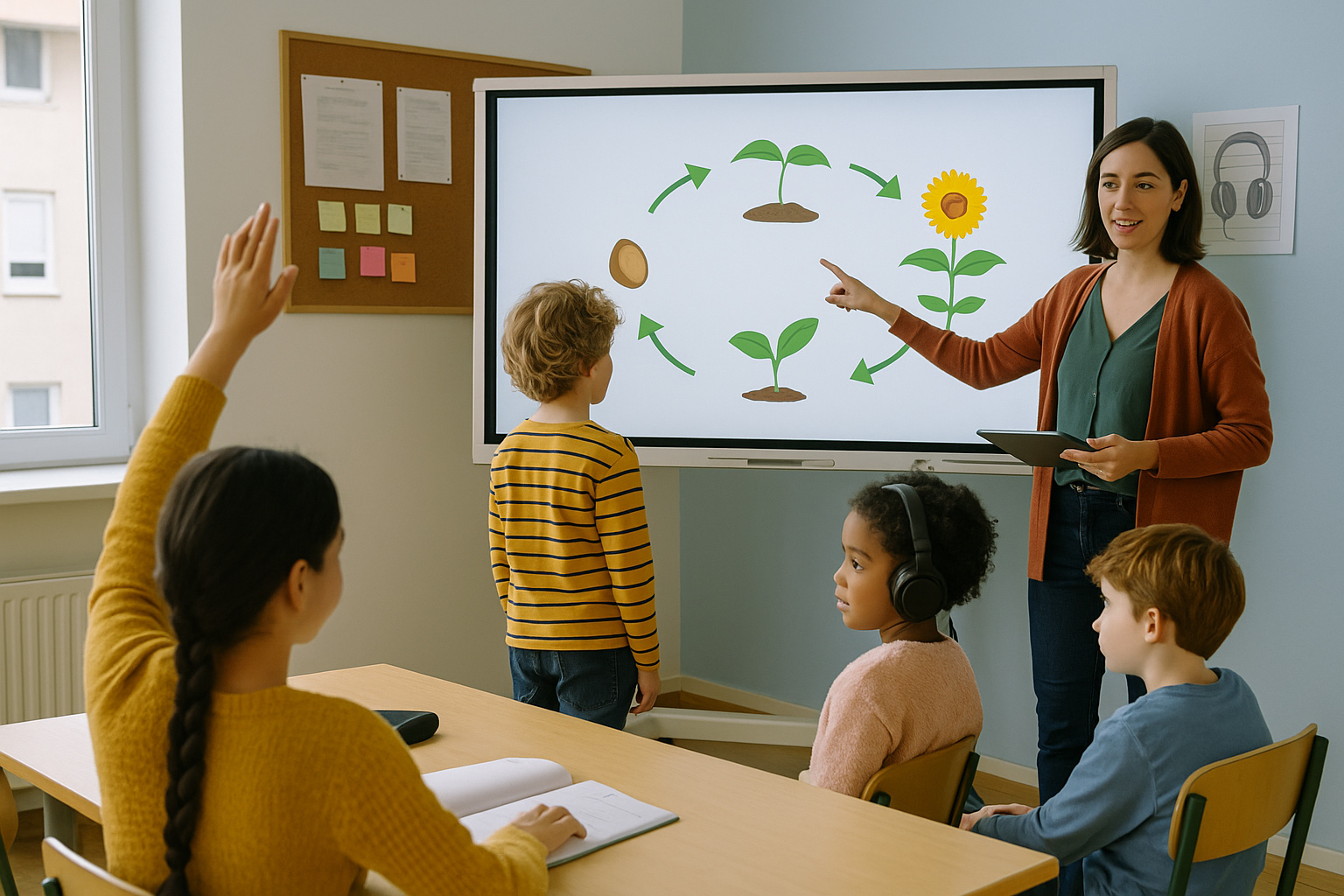
Every student learns differently, and a single teaching method rarely reaches everyone effectively. Multi-format learning solves this challenge by teaching the same concept through pictures, audio, movement, and story. When lessons activate multiple senses, students connect with material more deeply and remember it longer. This approach transforms classrooms into dynamic, inclusive spaces where every learner has a way to understand and engage.
Why Multi-Format Learning Works
The brain processes information faster and more efficiently when multiple learning pathways are activated. Some students respond best to visual cues, others thrive with sound, motion, or narrative structure. Teaching through several formats reinforces understanding from different angles, turning abstract concepts into meaningful experiences. This flexibility helps students build confidence and reduces frustration.
Using Pictures to Strengthen Visual Thinking
Images simplify complex ideas by turning them into something students can see. Diagrams, charts, drawings, and illustrations help break down difficult topics and support comprehension. Visuals are especially effective for students who learn best through observation and spatial reasoning.
Adding Audio for Sound-Based Learners
Audio tools—narration, sound effects, music, and verbal explanations—help reinforce lessons through rhythm and tone. Listening activates memory differently than reading or viewing images. Podcasts, voice recordings, and read-aloud activities make learning more accessible for auditory learners.
Movement Brings Concepts to Life
Physical activity supports kinesthetic learners who understand through action. Movement-based lessons—acting out a process, building models, or using gestures—make learning tangible. When students move their bodies, they connect emotionally and physically to what they’re learning, boosting retention.
Storytelling Creates Emotional Connection
Stories give lessons context and meaning. By framing concepts as narratives, teachers help students relate personally to the material. Stories spark imagination, deepen understanding, and make complex ideas easier to remember. This approach works well for all learners because it blends emotion, structure, and creativity.
Conclusion
Multi-format learning ensures that every student has a pathway to understanding. By teaching concepts through pictures, audio, movement, and story, educators create rich, engaging lessons that strengthen memory and inspire curiosity. This inclusive approach builds stronger comprehension and makes learning more enjoyable for everyone.
Related Articles


Recent Posts

Designing Compact Choice Menus to Foster Student Decision-Making
Teaching Students to Sequence Tasks for Deeper Engagement
Practical Classroom Methods for Teaching Strategic Study Prioritization
Translate Everyday Work into Clear Professional Evidence
A Practical Process for Building Portable Career Proofs


