Medical education is undergoing a remarkable shift as artificial intelligence becomes integrated into training environments. Traditional learning methods—lectures, textbooks, and limited hands-on practice—are giving way to immersive, AI-enhanced experiences that mimic real clinical scenarios. These simulations allow future healthcare professionals to develop confidence, refine decision-making skills, and practice complex procedures in a safe, controlled setting. As AI continues to advance, it is reshaping how students learn, practice, and prepare for real-world medical challenges.
Creating Realistic Clinical Scenarios
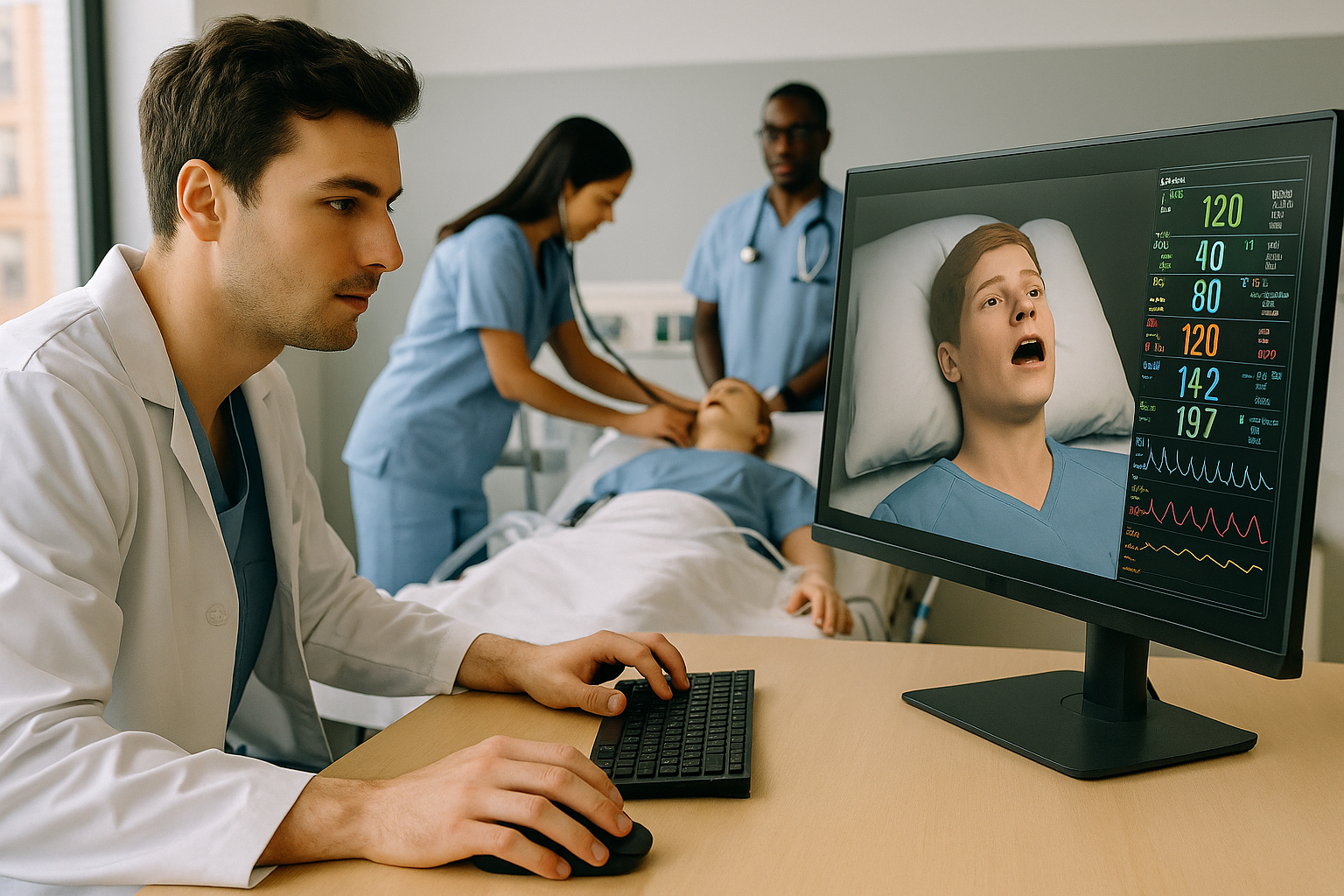
AI-powered simulations replicate a wide range of medical conditions, patient responses, and emergency situations with extraordinary accuracy. Students can interact with virtual patients who display symptoms, react to treatment, and change condition in real time. This level of realism helps learners develop strong diagnostic reasoning and clinical judgment. Instead of relying solely on textbook descriptions, students experience what it’s like to treat dynamic, complex cases without risking patient safety.
Personalized Learning for Every Student
AI adapts to each learner’s performance, offering customized guidance based on strengths and weaknesses. If a student struggles with diagnosing certain conditions or performing specific procedures, the simulation adjusts to provide targeted practice. This personalized approach ensures that learners build competence at their own pace. It also gives educators detailed insights into student progress, allowing for more effective support and coaching.
Enhancing Procedural Skill Development
From surgical techniques to emergency care, AI-driven simulations help students practice high-stakes procedures repeatedly. Virtual reality platforms combined with AI offer tactile feedback, realistic anatomy, and step-by-step guidance. As learners improve, simulations become more complex to match their growing skill level. The ability to practice difficult procedures without risk greatly accelerates skill acquisition and prepares students for hands-on clinical rotations.
Improving Teamwork and Communication
Healthcare is collaborative, and AI simulations reflect that reality. Multi-user environments allow teams of students to work together on shared virtual cases, practicing communication and decision-making under pressure. These exercises help future clinicians develop the interpersonal skills essential for high-quality patient care. Teams learn to delegate tasks, share information clearly, and respond quickly to changing conditions—all within a realistic digital setting.
Conclusion
AI-powered simulations are revolutionizing medical education by offering immersive, personalized, and risk-free learning experiences. They help students refine clinical skills, strengthen teamwork, and prepare more confidently for real-world healthcare settings. As technology continues to evolve, AI will play an increasingly vital role in shaping the next generation of medical professionals.