Science education has traditionally relied on physical laboratories to bring theory to life. While effective, in-person labs can be limited by cost, safety constraints, scheduling, and access. Virtual labs are changing this dynamic by allowing students to experiment, observe, and analyze in fully digital environments. As online education continues to grow, virtual labs are becoming a powerful tool for making science learning more accessible, interactive, and effective.
Making Hands-On Learning Accessible Anywhere
Virtual labs remove geographic and logistical barriers that often limit laboratory access. Students can conduct experiments from anywhere with an internet connection, eliminating the need for specialized facilities. This accessibility benefits learners in remote locations, institutions with limited resources, and students balancing education with other responsibilities. By democratizing lab access, virtual labs expand who can participate meaningfully in science education.
Safe Experimentation Without Physical Constraints
Many scientific experiments involve risks, expensive materials, or complex equipment. Virtual labs allow students to explore these scenarios safely without concern for accidents or material waste. Learners can repeat experiments multiple times, test different variables, and learn from mistakes without real-world consequences. This freedom encourages curiosity and deeper exploration, reinforcing scientific thinking.
Enhancing Understanding Through Visualization
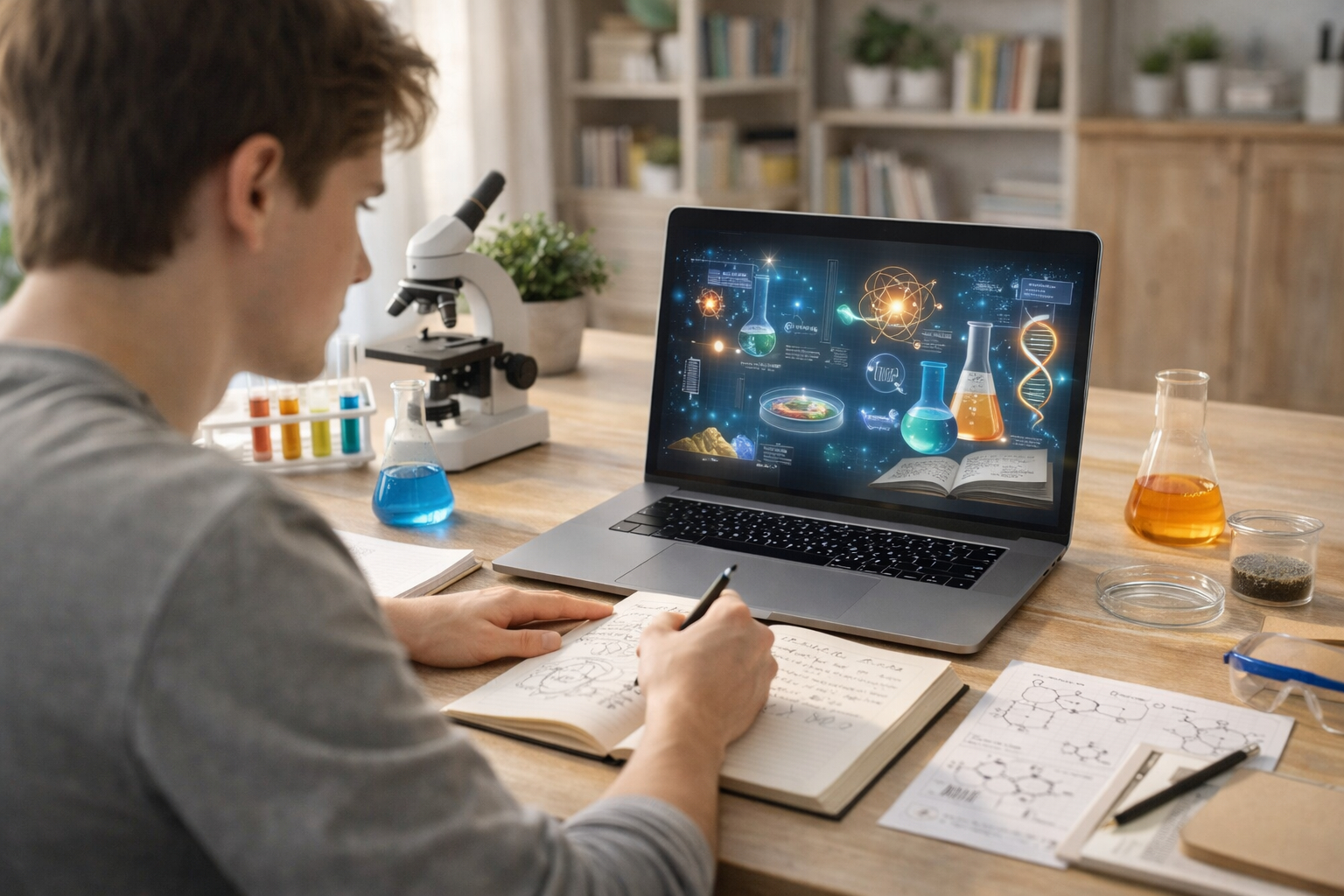
Virtual labs excel at visualizing processes that are difficult to observe in physical settings. Simulations can show molecular interactions, chemical reactions, or physical forces in real time. These visual elements help students grasp abstract concepts more clearly. By linking theory with dynamic visuals, virtual labs strengthen conceptual understanding and retention.
Supporting Personalized and Self-Paced Learning
Online virtual labs allow students to learn at their own pace. Learners can pause, rewind, or revisit experiments as needed, reinforcing comprehension. Adaptive platforms may adjust complexity based on performance, providing additional guidance where needed. This personalization supports diverse learning styles and reduces frustration often associated with rigid lab schedules.
Integrating Data Analysis and Scientific Skills
Virtual labs go beyond observation by emphasizing data collection and analysis. Students practice recording results, interpreting data, and drawing conclusions using built-in tools. These skills mirror real scientific workflows and prepare learners for advanced study or careers. The digital format also makes it easier to assess understanding and provide timely feedback.
Conclusion
Virtual labs are revolutionizing science learning online by making experimentation more accessible, safe, and engaging. Through visualization, personalization, and skill development, they bring scientific inquiry to life in digital spaces. As technology advances, virtual labs will continue to play a central role in modern science education.